Published
- 18 min read
Audio-Technica AT-LP120XUSB Review: The Crosley Upgrade Everyone Makes
Curated by Nova · vibespecs
⭐ My editorial rating: 4.7 / 5 — how I rate →
Heads up: This is an editorial review compiled from verified Amazon reviews, manufacturer specifications, and named editorial coverage from What Hi-Fi? and Louder Sound. The rating above is my own editorial rating, not an average of Amazon’s stars. It contains Amazon affiliate links — if you buy through them I earn a small commission at no extra cost to you. The picks are based on what the data says, not on sponsorship; no brand paid for or pre-approved this post.
Every vinyl collection has the same origin story. A starter turntable, usually a Crosley suitcase or one of its plastic siblings, gifted at a birthday or picked up on a college-dorm impulse. It plays records. It looks vaguely retro. The needle pressure isn’t adjustable because the platter mechanism doesn’t have that kind of articulation, which means every spin of a record wears it down faster than it should. By year two, the collection grows past 30 LPs and the listener starts hearing the difference between a worn copy and a fresh one. The Crosley becomes the thing that’s actively damaging the records the listener now cares about.
That’s when the upgrade happens. And the deck people upgrade to, consistently across forums, Reddit threads, and the Amazon review set, is the Audio-Technica AT-LP120XUSB.
The 8,900+ Amazon reviews say the same thing in slightly different words: this is the deck where vinyl actually starts sounding like vinyl. Direct drive (no belt to stretch over time). Adjustable counterweight + anti-skate (your records last longer). A real Audio-Technica AT-VM95E cartridge (upgradeable, not glued in). 33, 45, and 78 RPM speeds (the 78 is unusual at this price and lets you play pre-war records). Switchable built-in phono preamp (plug it into any amp without a separate phono stage). USB digitizing (turn your 78s and 33s into MP3s on a laptop).
What Hi-Fi? called it “tonally even-handed.” Louder Sound called it “a remarkable piece of inexpensive direct-drive engineering.” At ~$300-360, the AT-LP120XUSB sits in the rare sweet spot between the $90 starter decks that destroy records and the $600+ audiophile entries that demand a separate phono preamp.
Short version: yes, this is the deck. Here’s the breakdown.
First Impression: What Buyers Notice on Day One
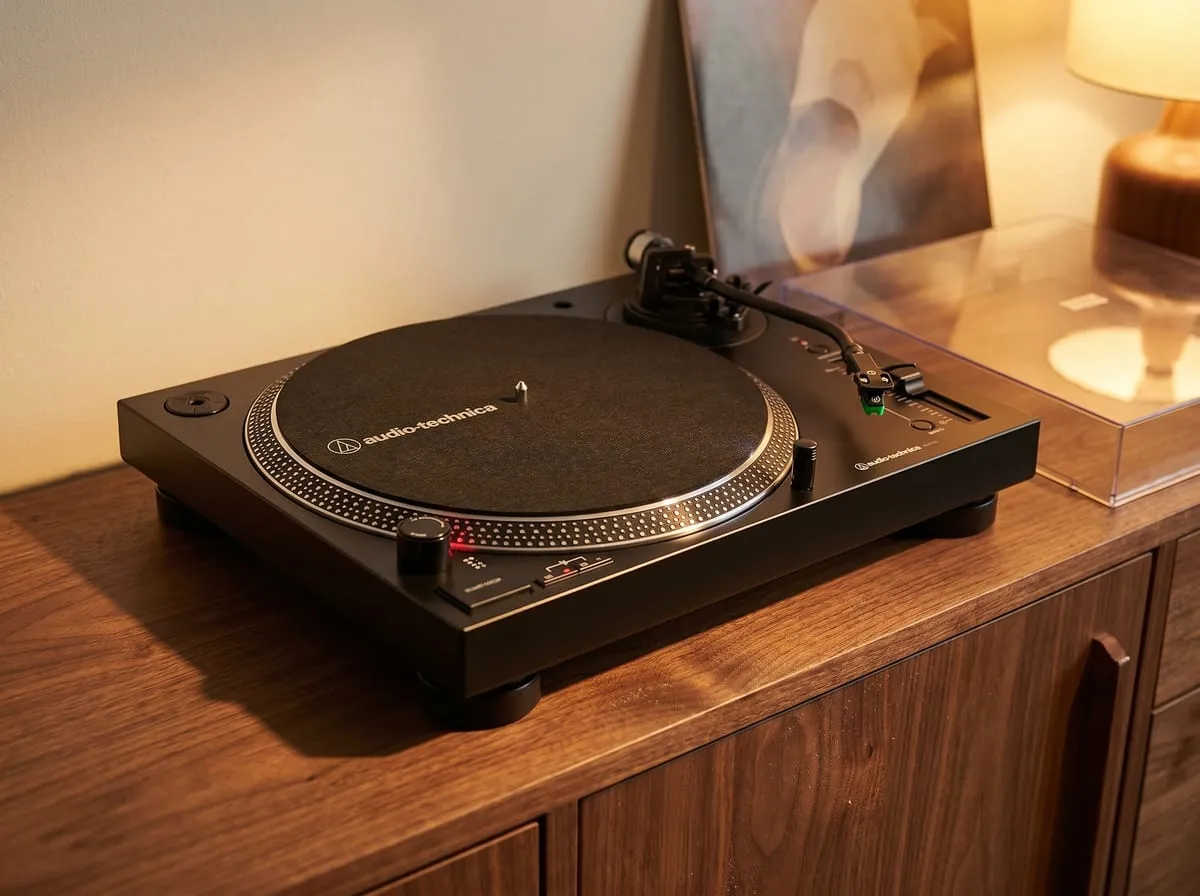
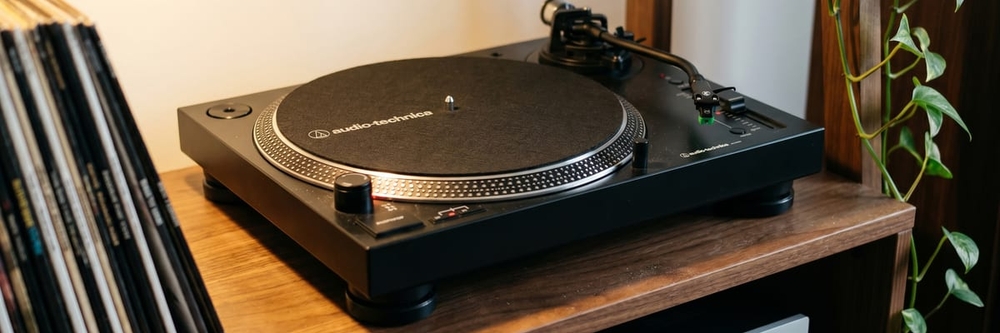
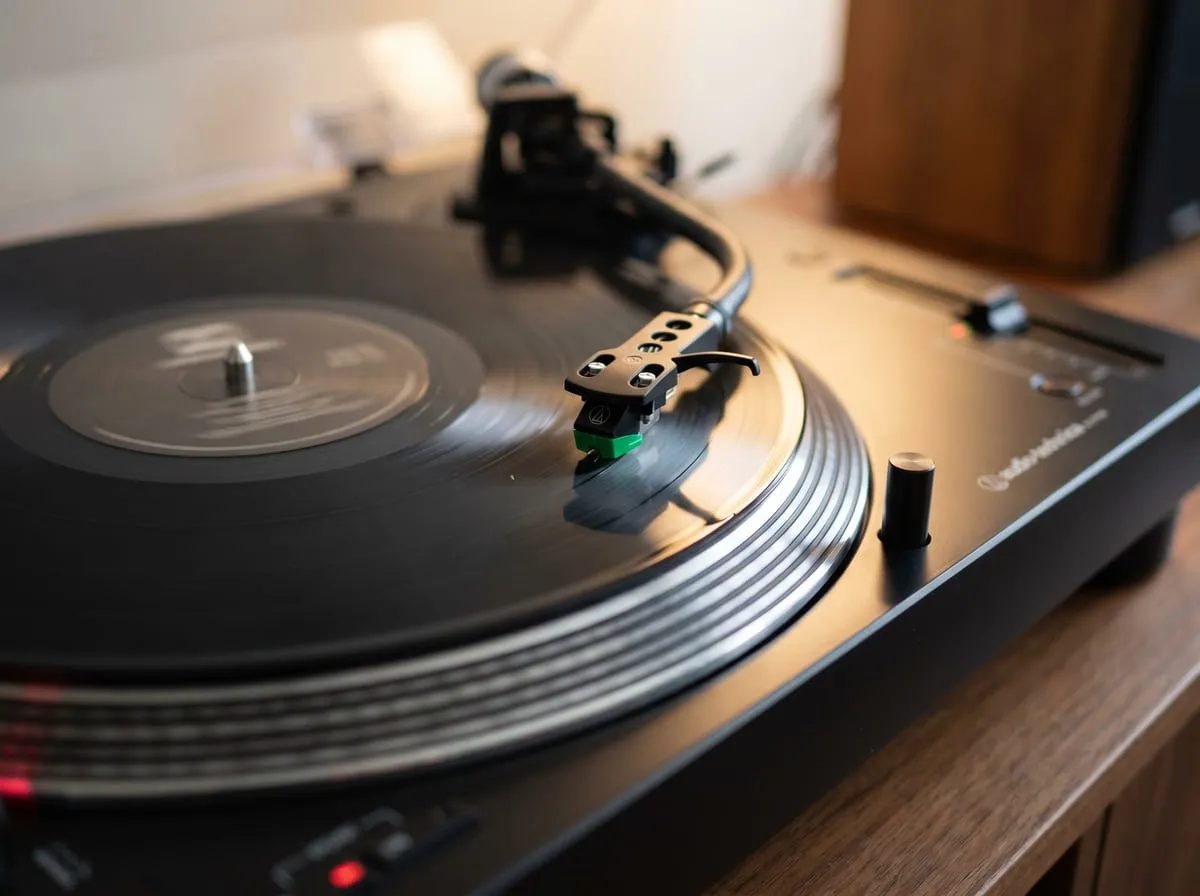
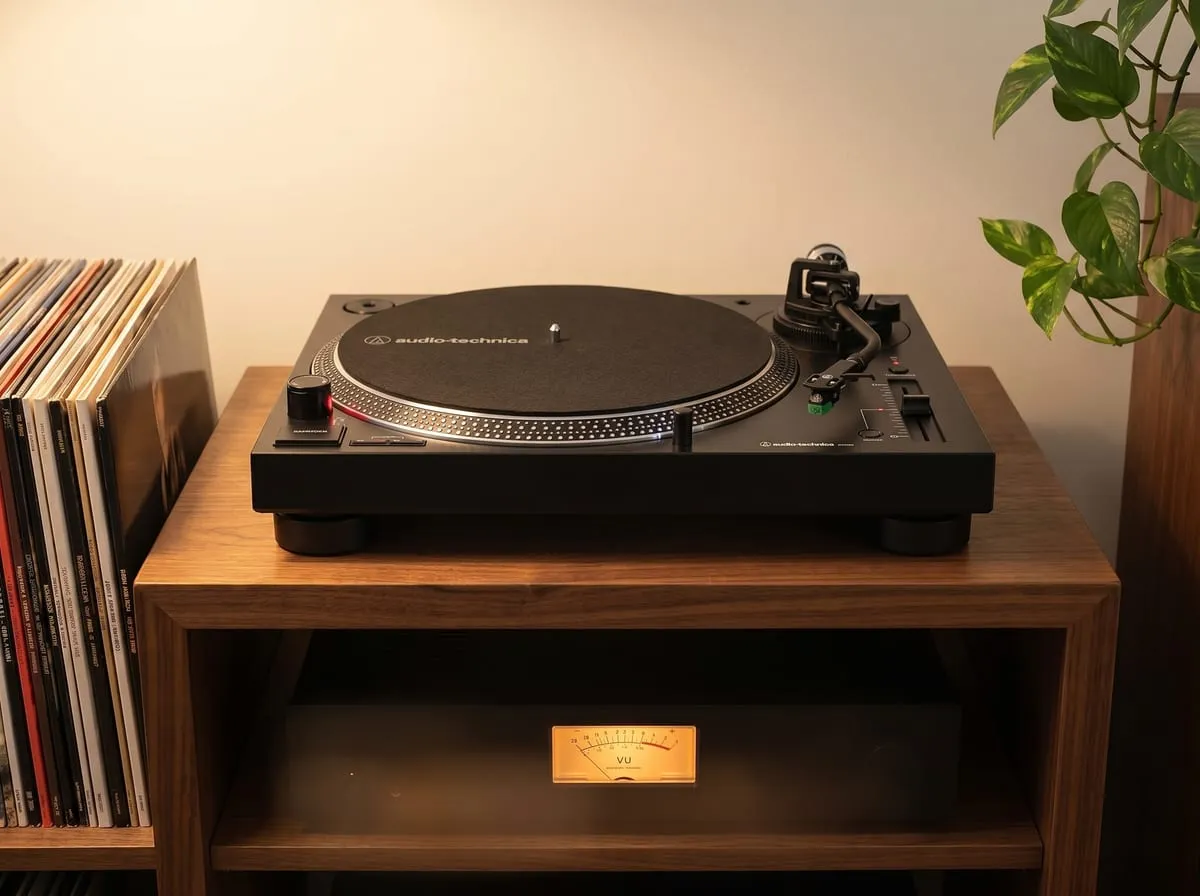
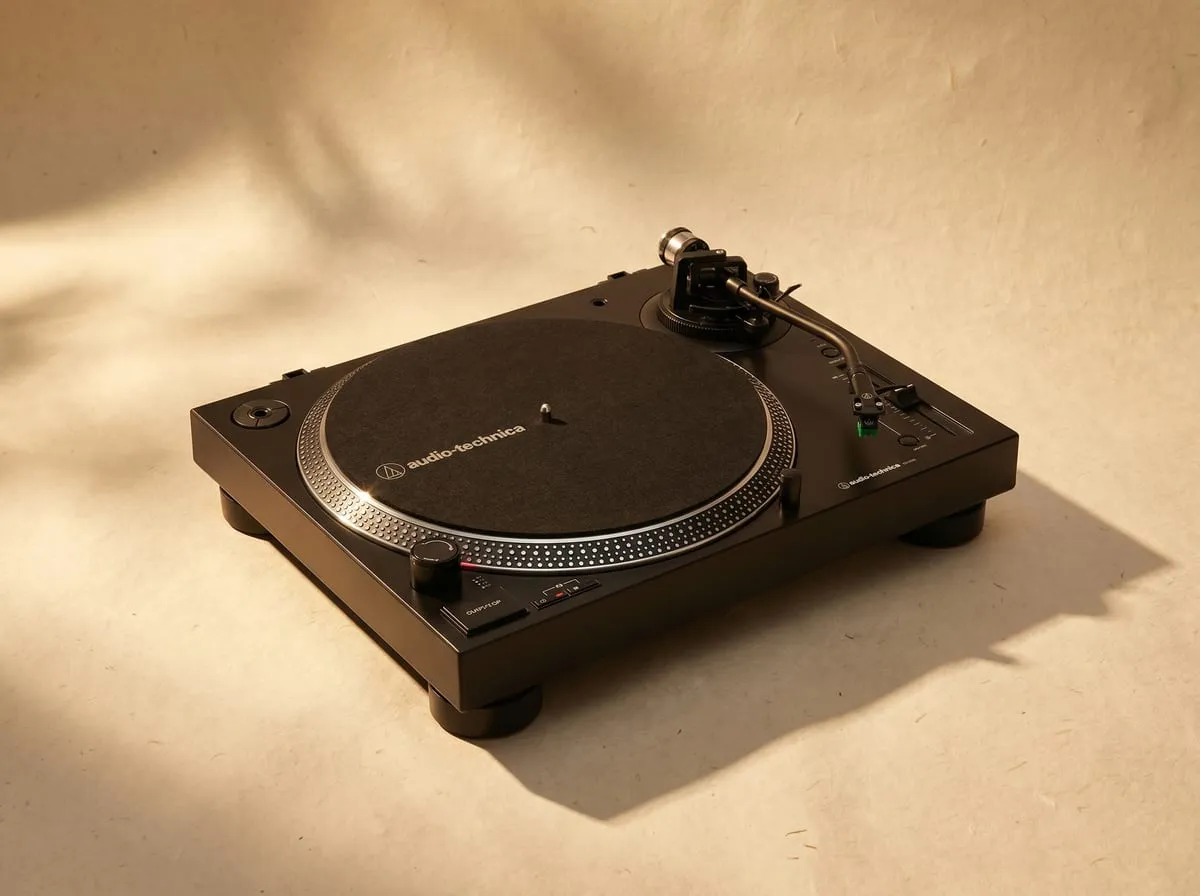
The first thing buyers notice is the weight. The AT-LP120XUSB is a real deck — substantial die-cast aluminum platter, S-shaped tonearm with adjustable counterweight, anti-skate dial, target light for cueing in dim rooms, hinged dust cover. Pulled out of the box, it feels closer to a DJ deck (the LP120 form factor was originally designed to compete with the Technics SL-1200) than to a consumer hi-fi product. For buyers stepping up from a suitcase Crosley, the difference in physical presence is the first signal that this is a different category of object.
The second thing is the layout. Direct drive, switchable phono preamp, USB output, three speeds (33-1/3 / 45 / 78 RPM) on the front panel, pitch slider on the side, dedicated start/stop buttons — every control sits where a working DJ or hi-fi enthusiast expects. The included AT-VM95E cartridge is mounted to a removable headshell, which means upgrading the cartridge later is a 30-second swap (not a 30-minute alignment ritual).
One buyer frames the price-to-value reaction directly from a B&O upgrade scenario: forced to replace a 40-plus-year-old Bang & Olufsen turntable they couldn’t afford to match new, they found the Audio-Technica a great deal — describing the sound as crisp, clean, and resonant run through a Yamaha amplifier.
A 40-year B&O owner replacing his deck with the AT-LP120XUSB and calling the sound crisp, clean, and resonant is the strongest credential the review set carries. This isn’t a casual buyer praising a casual deck.
Honest day-one friction (worth knowing): the start button doesn’t work until you flip the POWER switch on the back-left. Buyers flag it — pressing start with a record on the platter does nothing until the dedicated POWER button to the left of the platter is switched on first.
Easy to think the unit is broken on day one. It isn’t. The power switch is dedicated and separate from the start/stop control.
Why Direct Drive Matters
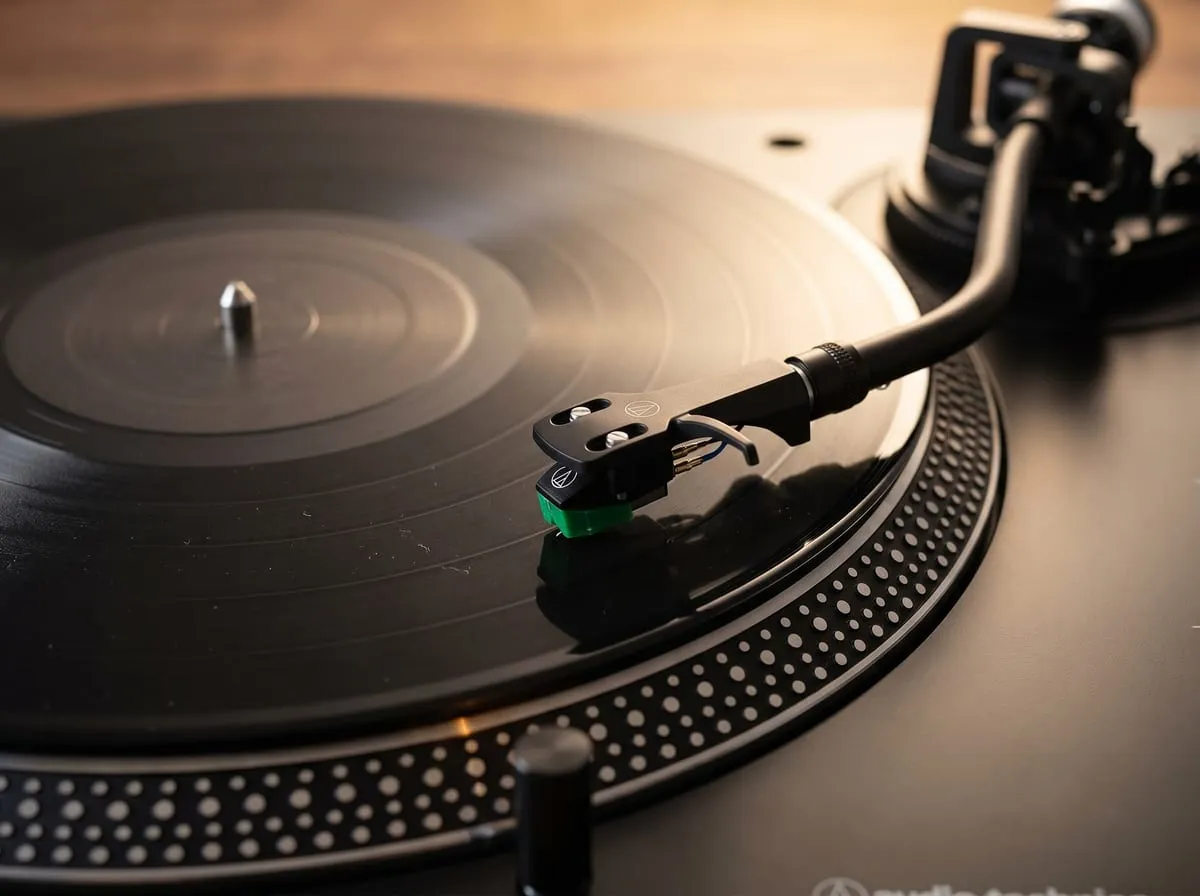
The single biggest engineering distinction between the AT-LP120XUSB and most decks under $400 is the drive mechanism.
Belt drive (what Crosleys and most entry-level Pro-Jects use): A rubber belt loops around the motor pulley and the platter. The belt stretches over time, which slowly drifts the playback speed. Belts need replacement every few years. The benefit is acoustic isolation — the belt absorbs motor vibration before it reaches the platter, which audiophiles prize for quiet playback.
Direct drive (what the AT-LP120XUSB uses): The motor sits directly under the platter and turns it from the center spindle. No belt to stretch, no belt to replace. The platter reaches full speed instantly when you press start (where belt drives spin up over 2-3 seconds). The trade-off is that motor vibration travels more directly to the platter, which is why audiophile belt-drive purists prefer their setup at higher price points.
What the AT-LP120XUSB does well is engineer the direct drive to minimize vibration at this price. Louder Sound called it directly:
“A remarkable piece of inexpensive direct-drive technology… a supremely solid player with unflappable stability in the face of bumps and bangs.”
For the practical use case at this price tier — playing a record collection at home, hosting a listening session, using the deck for occasional DJ duty — direct drive is the right call. Belt drive becomes the right call at the $600+ tier where audiophile listening rooms have isolated the rest of the signal chain enough that motor noise becomes the limiting factor.
For everyone else, the direct drive on the AT-LP120XUSB is a feature, not a compromise.
The Crosley Quitter Story (Why Stylus Pressure Matters)
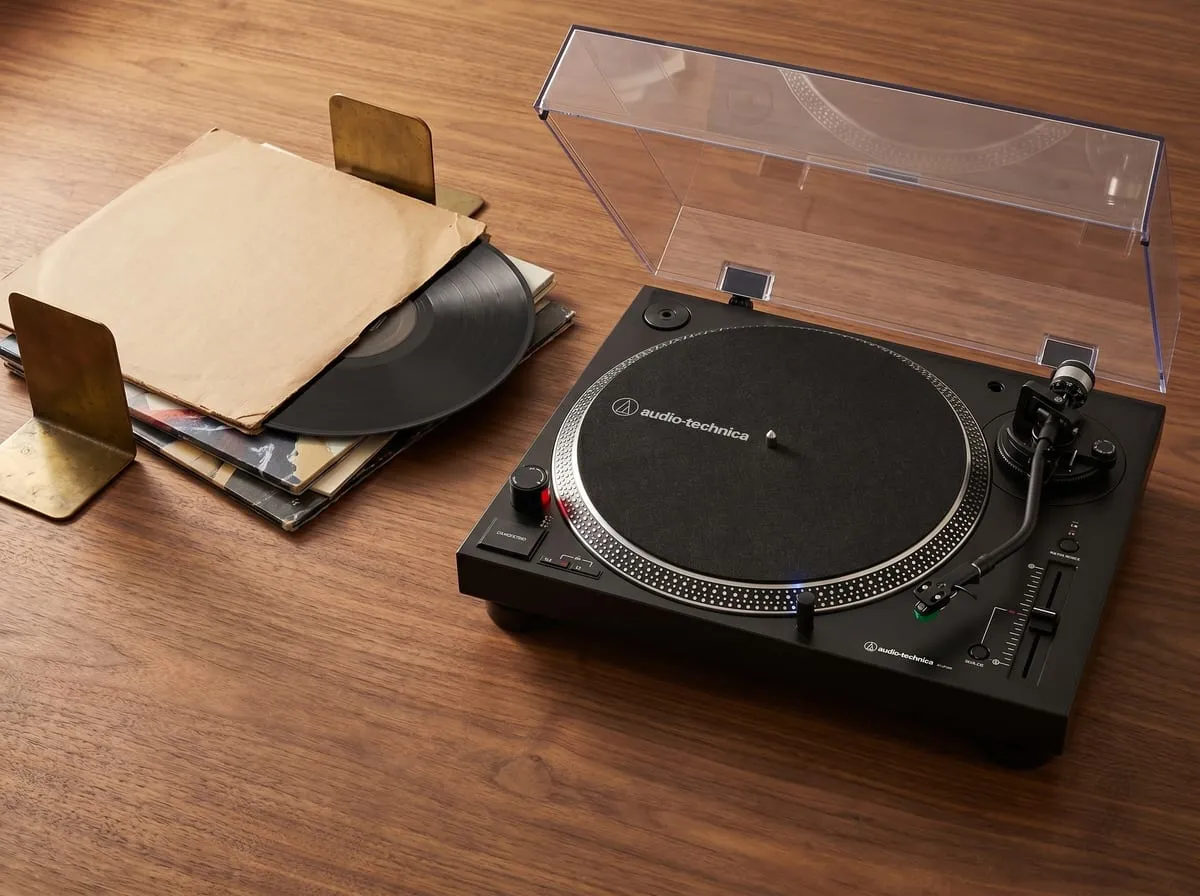
This is the section that explains why the upgrade happens.
Buyers put the case directly: this is a great entry-level turntable that can last a lifetime, and the warning that follows is the key one — a bargain-bin deck will play your records, but its non-adjustable needle pressure wears out both the records and the needle far faster.
The technical claim is real. The AT-LP120XUSB has an adjustable counterweight on the back of the tonearm that lets you set the tracking force (how hard the stylus presses on the record) to the cartridge manufacturer’s spec — for the included AT-VM95E, that’s 2.0 grams. Plus an anti-skate dial that counteracts the centripetal force pulling the tonearm inward, keeping the stylus tracking dead-center in the groove.
A Crosley Cruiser (and every plastic-suitcase competitor) has neither. The tonearm pressure is fixed (typically too heavy — around 5-6 grams), and there’s no anti-skate at all. The cumulative result is that every spin shaves microscopic vinyl off the record. Run a Crosley over a record 20-30 times and the surface noise is audibly worse than it was on the first spin. Run an AT-LP120XUSB over the same record 1,000 times and the wear is barely measurable.
For a buyer with a $0-100 collection, this doesn’t matter. For a buyer with a $1,000+ collection (which a serious vinyl listener accumulates within 2-3 years), the difference between “Crosley-worn-out at year 5” and “AT-LP120XUSB-pristine at year 20” is the difference between replacing the collection and keeping it.
That’s the Crosley-quitter story compressed into one paragraph. The AT-LP120XUSB is the deck that stops the damage and protects the collection going forward.
USB Digitizing — The Underrated Feature
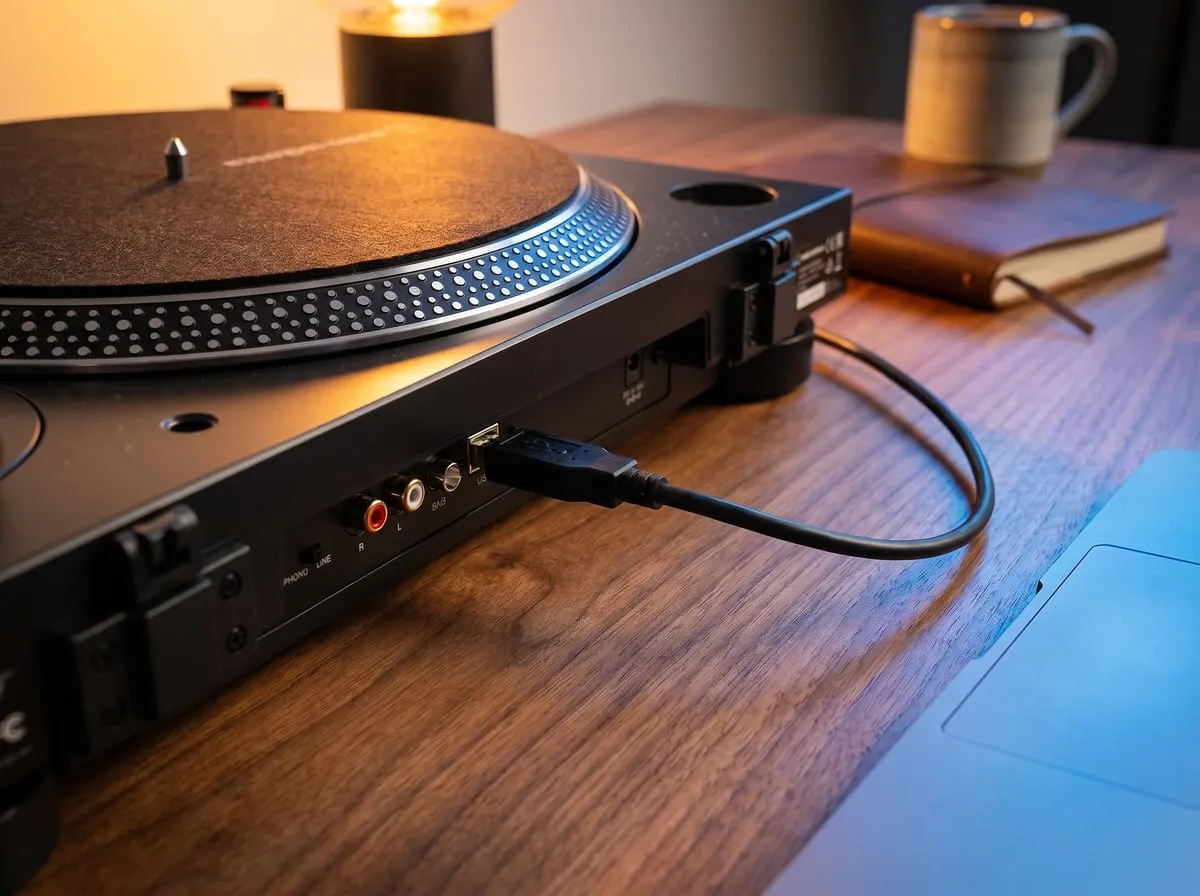
The “USB” in AT-LP120XUSB is the differentiator that most audiophile-tier decks don’t offer. A USB-B port on the back of the deck connects to any laptop (Mac or PC), and the included Audacity-compatible software captures the analog audio directly to MP3, WAV, or FLAC.
The use case buyers describe is the one most don’t realize they want until they own the deck: replacing an old, outdated turntable and finally being able to record their 78s, 33s, and 45s to a laptop.
The 78 RPM speed is the unusual one. Most modern turntables play 33s and 45s; 78s are pre-war records, usually thick shellac discs, often inherited from grandparents or thrifted from estate sales. The AT-LP120XUSB plays them. With the USB connection plus the 78 RPM speed, the deck becomes the digitization tool for an entire family’s pre-war record archive — Sinatra big-band recordings, Caruso opera, Robert Johnson blues — preserved as digital files before the shellac degrades any further.
For listeners with inherited 33 and 45 collections, the same logic applies in reverse. A rare press of a Coltrane album or a UK Stones first pressing is worth more in original physical condition; USB digitizing creates a backup copy for everyday listening while the original sits safely in the sleeve.
Pro-Ject Debut Carbon (the closest direct competitor at this price tier) doesn’t offer USB output. Rega Planar 1 doesn’t either. For buyers who specifically want USB digitizing — and many do, especially anyone who inherited a parent or grandparent’s vinyl collection — the AT-LP120XUSB is the cleanest option in the category.
The Honest Negatives
Three frictions worth knowing before purchase:
Setup confusion on day one. As noted above, the deck has a separate POWER switch (on the rear-left) and a START/STOP button (on the front). Hitting Start with the power off looks like a defect; it isn’t. Two minutes of reading the included manual prevents the return.
Prior-generation motor failure risk (mitigated, but worth knowing). Buyers flag the legacy issue: there were reports of the motor and PC board burning up on the previous model, and a common precaution is to run the deck off a receiver’s switched power source so it isn’t powered internally 24/7.
The prior LP120-USB (without the X) had documented motor failures in some units after extended always-on use. The AT-LP120XUSB (the current X-suffix model — the one this review covers) addresses the issue in updated electronics, but the conservative practice Ken describes (plug the deck into a switched outlet so it doesn’t sit powered-on 24/7) is good hygiene for any direct-drive turntable. Use the deck, then power it down. Motors last longer that way.
Audiophile-tier upgrade path is real. What Hi-Fi? noted the AT-LP120XUSB is “tonally even-handed” but not class-leading at the top end. The bass is warm rather than tight; the noise floor is fine for casual listening but audible if you upgrade to a high-end phono preamp. The included AT-VM95E cartridge is a solid mid-tier choice ($50 retail as a standalone purchase); upgrading to an AT-VM95ML ($160) or a Nagaoka MP-110 (~$135) measurably improves the high end. Replacing the rubber slipmat with a felt or cork mat tightens the bass slightly. These are good upgrades to know exist; none are required for the deck to be enjoyable out of the box.
None of these are deal-breakers. All three are honest pre-purchase points.
Head-to-Head: vs. Pro-Ject Debut Carbon, Rega Planar 1, Crosley Cruiser
Crosley Cruiser (~$90): Suitcase turntable. Belt drive. Fixed tonearm pressure (~5-6g, too heavy). No anti-skate. No upgradeable cartridge. Built-in speakers (cheap). Wears records measurably faster than any deck with adjustable tracking force. The starter deck most vinyl collections start with — and the deck the AT-LP120XUSB exists to replace.
Audio-Technica AT-LP120XUSB (~$300-360): Direct drive. Adjustable counterweight + anti-skate. Upgradeable AT-VM95E cartridge on removable headshell. Switchable built-in phono preamp. USB digitizing. 33/45/78 RPM. The deck for the listener who wants the upgrade without crossing into audiophile-tier pricing.
Pro-Ject Debut Carbon Evo (~$450): Belt drive. Carbon-fiber tonearm. Solid build with audiophile-leaning tuning. Ortofon 2M Red cartridge included (slightly better than the AT-VM95E for tonal accuracy). No USB output. No 78 RPM. No built-in phono preamp (need to add a $50-100 phono stage). The right call for a buyer specifically going audiophile and willing to pair it with a phono preamp and modern records only.
Rega Planar 1 (~$600): Belt drive. Hand-assembled in the UK. Carbon-fiber tonearm. Rega Carbon MM cartridge. The closest entry to audiophile-tier sound at a sub-$700 price. No USB. No 78 RPM. No built-in phono preamp. Same trade-off as the Pro-Ject — better sound at higher cost, narrower use case.
For Crosley upgraders specifically: the AT-LP120XUSB is the right next deck. The Pro-Ject and Rega are options for buyers two upgrades down the line who’ve already lived with an LP120 for a few years and want to chase further refinement.
For buyers who specifically need USB digitizing or 78 RPM playback: the AT-LP120XUSB is the only one of the four that offers either feature. The audiophile decks above it drop both.
Features Breakdown
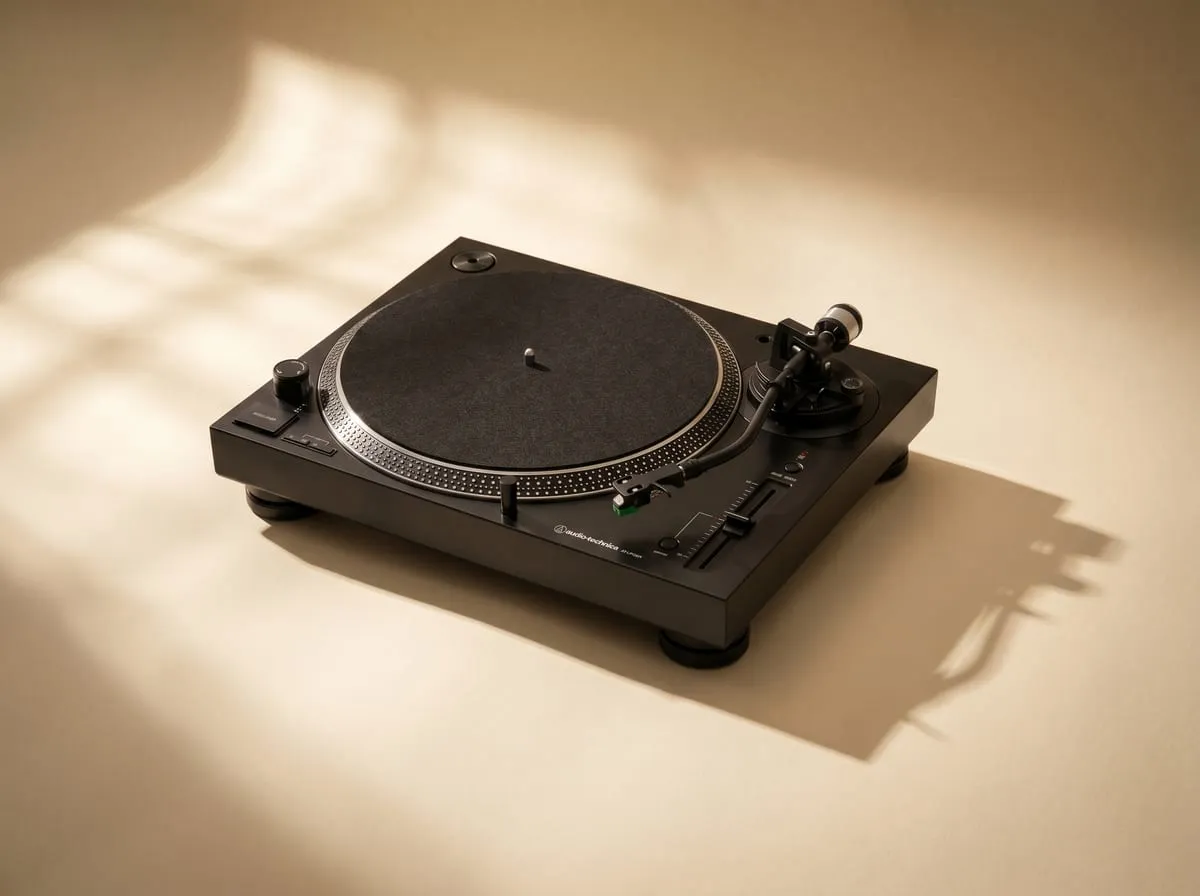
The hero specs:
- Direct-drive motor — No belt to stretch or replace. Instant start-up speed. Stable across years.
- 33-1/3 / 45 / 78 RPM — The only common entry-level deck with 78. Plays the full vinyl history.
- AT-VM95E cartridge — Factory-installed on a removable headshell. Upgradeable in under a minute.
- Adjustable counterweight + anti-skate — Protect your records by setting correct tracking force.
- Built-in switchable phono preamp — Plug straight into any amplifier or powered speakers. Switch off the preamp if your amp already has a phono stage.
- USB output — Digitize records directly to a laptop (Audacity-compatible). 33/45/78 RPM all digitize.
- S-shaped tonearm with adjustable counterweight — Hi-fi geometry, not consumer-grade.
- Die-cast aluminum platter — Heavy mass for stability.
- Variable pitch (±8 / ±16%) — Useful for DJ duty or correcting pitch on slightly-warped records.
- Target light — For cueing in dim listening rooms.
- Hinged dust cover — Standard inclusion.
- Stroboscope dots on platter edge — Visual confirmation of speed accuracy.
Notable absences:
- No Bluetooth output (wired only — RCA + USB)
- No carbon-fiber tonearm (S-shaped aluminum)
- No premium Ortofon or Nagaoka cartridge (the AT-VM95E is solid mid-tier; upgrade if you want more)
- No included phono cable (use the supplied RCA + ground wire)
- Lighter chassis than the original LP120-USB (some buyers prefer the original’s heavier build)
Is It Worth ~$300-360?
The math depends on the collection size and the upgrade journey.
For Crosley upgraders: Yes, comfortably. The math against record damage alone justifies it within the first 50-100 LPs played.
For first-time vinyl buyers with no current deck: Yes if you’re committed to the format. Skip the Crosley stage entirely; the AT-LP120XUSB is the right first deck for someone who’s certain they want to collect records.
For audiophile buyers comparing to Pro-Ject or Rega: Maybe. The Pro-Ject Debut Carbon Evo and Rega Planar 1 sound slightly better with the right phono preamp added — at ~$100-200 more once you factor in the missing phono stage. If USB digitizing or 78 RPM playback matters, the AT-LP120XUSB is uncontested. If neither matters and audiophile sound is the priority, the Pro-Ject or Rega is the right call.
For DJ-curious buyers: Yes. The pitch slider and direct-drive instant-start are real DJ features the audiophile decks specifically don’t include.
The B&O-replacement story above is the strongest single-paragraph case for the deck: a 40-year Bang & Olufsen owner accepted the AT-LP120XUSB as a credible replacement at a fraction of a new high-end deck’s cost.
For buyers building out a vinyl-listening room around the deck, the Marshall Emberton III review covers a portable speaker option that visually pairs with the AT-LP120XUSB’s hi-fi-tier design language (both objects look like furniture rather than gadgets). The turntable is also featured in the broader Best Tech Gifts For Him 2026 roundup alongside the rest of the audio, desk, and wearables lineup.
How we scored the AT-LP120XUSB — 4.7 / 5
My rating isn’t an average of anyone’s stars — it’s an editor’s read across the things that actually decide whether a turntable earns its spot — weighed from the feature set, the published specs, the build, and the themes that recur across owner feedback. Here’s how the AT-LP120XUSB landed:
| What we weighed | Call | Why |
|---|---|---|
| Sound & playback | Strong | Direct drive hits full speed instantly with no belt to stretch; What Hi-Fi? called it tonally even-handed, with bass that’s warm rather than tight. |
| Features & versatility | Excellent | 33/45/78 RPM, switchable built-in phono preamp, and USB digitizing — a feature set the Pro-Ject and Rega at higher prices both drop. |
| Build & longevity | Strong | Die-cast aluminum platter and S-shaped tonearm feel closer to a DJ deck; the X-suffix model addresses the prior generation’s motor-failure reports in updated electronics. |
| Value | Excellent | At about $300-360 it sits between the $90 starter decks that wear records and the $600-plus audiophile entries that still need a separate phono stage. |
| Setup & upgrade path | Good | The AT-VM95E rides a removable headshell for a under-a-minute cartridge swap, though the separate rear POWER switch trips up buyers on day one. |
Why 4.7 and not a perfect 5: the separate POWER switch reads like a defect until you find it, the included AT-VM95E cartridge and warm noise floor leave real headroom for an upgrade, and it isn’t class-leading at the very top end the way an audiophile belt-drive deck can be.
This is my own editorial rating — not an average of Amazon’s stars. How I rate →
The Verdict
After working through the What Hi-Fi? “tonally even-handed” review, the Louder Sound “remarkable piece of inexpensive direct-drive engineering” framing, the 8,900+ verified Amazon buyers (one of the most-reviewed turntables in its class), the B&O-replacement story, the Crosley-quitter pattern that defines the deck’s market position, the USB digitizing edge that competitors at this tier specifically don’t offer, and the 78 RPM speed that handles the entire vinyl history (not just post-1948 LPs), here’s the read: the Audio-Technica AT-LP120XUSB is the right deck at the right time for the right buyer: the listener who’s done with Crosley-tier compromises and isn’t ready to spend $600+ on an audiophile-tier deck without USB or 78 RPM.
It isn’t a flagship. It isn’t trying to be. What it is: the most complete sub-$400 turntable on the market, designed by an audio company that’s been making cartridges and tonearms since 1962, with the kind of feature density (direct drive + USB + 78 RPM + adjustable tracking + built-in phono + upgradeable cartridge) that no competitor at this price matches.
Buy it if you:
- Have a Crosley (or any plastic-suitcase deck) and want to stop wearing out your records
- Are starting a vinyl collection and want to skip the Crosley stage entirely
- Have inherited 78 RPM records (Sinatra, big band, pre-war jazz) and need a deck that plays them
- Want USB digitizing for backup or laptop playback
- Like the option to upgrade the cartridge later without rewiring anything
- Want a deck that handles light DJ duty (pitch slider, direct drive, target light)
Skip it if you:
- Are committed audiophile-tier and willing to pair a Pro-Ject or Rega with a $100+ phono preamp
- Only listen to streaming services (turntable is a niche product; this is the wrong category if you don’t already own records)
- Specifically prefer belt drive for acoustic isolation reasons
- Want Bluetooth output (this deck is wired-only)
FAQ
Q: Does the AT-LP120XUSB have a built-in phono preamp? Yes, switchable. Flip the switch on the back to “PHONO” if your amplifier has a dedicated phono input (better tonal accuracy through the amp’s phono stage); flip to “LINE” to use the deck’s built-in preamp and plug into any line-level input or powered speakers. Both modes work; the difference is which phono stage handles the signal.
Q: Can it really play 78 RPM records? Yes, the third speed setting plays 78 RPM. You’ll need a 78 RPM stylus (different geometry than the included 33/45 stylus — the AT-VM95SP is the matching Audio-Technica 78 stylus, about $50). The deck supports the speed; the included cartridge handles 33s and 45s, and you swap the stylus or the full cartridge for 78s.
Q: Is USB digitizing easy? Yes. Plug the USB-B cable from the deck to a laptop, open Audacity (free, cross-platform), select the turntable as the input device, hit record on Audacity, then start the record on the turntable. Stop both when the side ends. Audacity can split tracks automatically by silence detection or you can manually slice between songs. Export as MP3, WAV, or FLAC.
Q: How does it compare to a Crosley? The AT-LP120XUSB has adjustable tracking force (your records don’t wear out), direct drive (no belt to stretch), an upgradeable cartridge (a Crosley’s needle is fixed-fragile), USB digitizing (Crosley doesn’t), 78 RPM (most Crosleys don’t), and an S-shaped tonearm with proper geometry. The Crosley plays records; the AT-LP120XUSB plays them well and preserves them for the long term.
Q: Can I upgrade the cartridge later?
Yes. The AT-VM95E sits on a removable headshell. Loosen the locking ring, slide the headshell off, plug a new headshell with a different cartridge in. Common upgrade paths: AT-VM95ML (microline stylus, $160), Nagaoka MP-110 ($135), Ortofon 2M Red (~$100). Each is a measurable improvement on the high end.
Q: Do I need separate speakers? Yes. The AT-LP120XUSB doesn’t have built-in speakers (unlike a Crosley suitcase). Plug the deck via RCA into an amplifier + passive speakers, or into powered speakers (Audioengine A2+, Kanto YU4, KEF LSX), or into a stereo receiver. The deck is the source; you supply the rest of the signal chain.
Q: Where can I buy the Audio-Technica AT-LP120XUSB? Available on Amazon here. Typically faster delivery and easier return than third-party listings.
Join the Nova’s Picks community 🔍
Get new honest reviews, roundups & finds first — and ask me what to buy before you do.
Join the free Facebook group →