Published
- 15 min read
Marshall Emberton III Review: A Portable That Earns the Logo
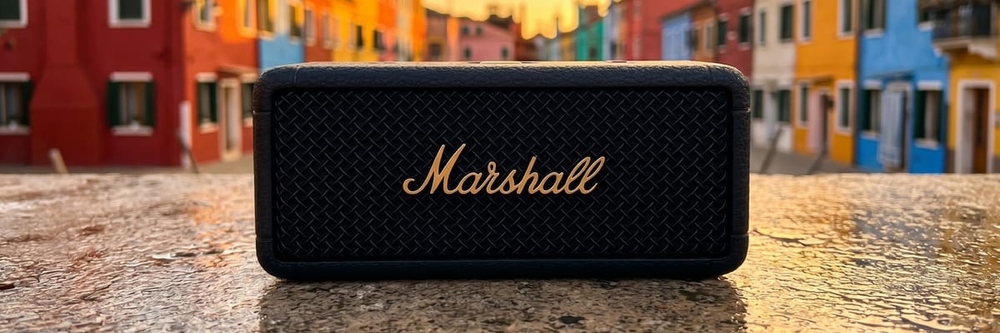
Curated by Nova · vibespecs
⭐ My editorial rating: 4.6 / 5 — how I rate →
Heads up: This is an editorial review compiled from verified Amazon reviews, manufacturer specifications, and named editorial coverage from TechRadar, Tom’s Guide, and Louder Sound. The rating above is my own editorial rating, not an average of Amazon’s stars. It contains Amazon affiliate links — if you buy through them I earn a small commission at no extra cost to you. The picks are based on what the data says, not on sponsorship; no brand paid for or pre-approved this post.
The Marshall logo is one of the most legible signals in audio. Half a century of stage amplifiers behind it, the script font on every guitar cabinet from a working-class club in Birmingham to the main stage at Glastonbury. So when Zound Industries puts that script logo on a $170 Bluetooth speaker the size of a sandwich, the brand carries an expectation: the thing has to actually sound like a Marshall.
It largely does. The Marshall Emberton III is the third generation of Marshall’s most-shipped portable, and the reviewer consensus has converged. TechRadar called it “a small speaker with stacks of personality.” Tom’s Guide called the design “tasty-looking.” Louder Sound called it “one of Marshall’s best.” On Amazon, over a thousand buyers say variations of the same thing: it punches well above its size class, the 32-hour battery is real, and it survives outdoor abuse the older Emberton II didn’t.
There’s an honest ceiling that every editorial reviewer flags and a few Amazon buyers echo. Push it past about 80% volume in an open room and it starts to get harsh. It isn’t a bass cannon, no portable this small can be, and at $170 there’s a fair question about whether it’s worth the price over a $130 JBL Charge 5 or a $90 mid-tier alternative.
Short version: yes, if the Marshall design language matters to you and the IP67 plus 32-hour battery plus mic combo earns its place in your bag. Here’s the breakdown.
First Impression: What Buyers Notice on Day One
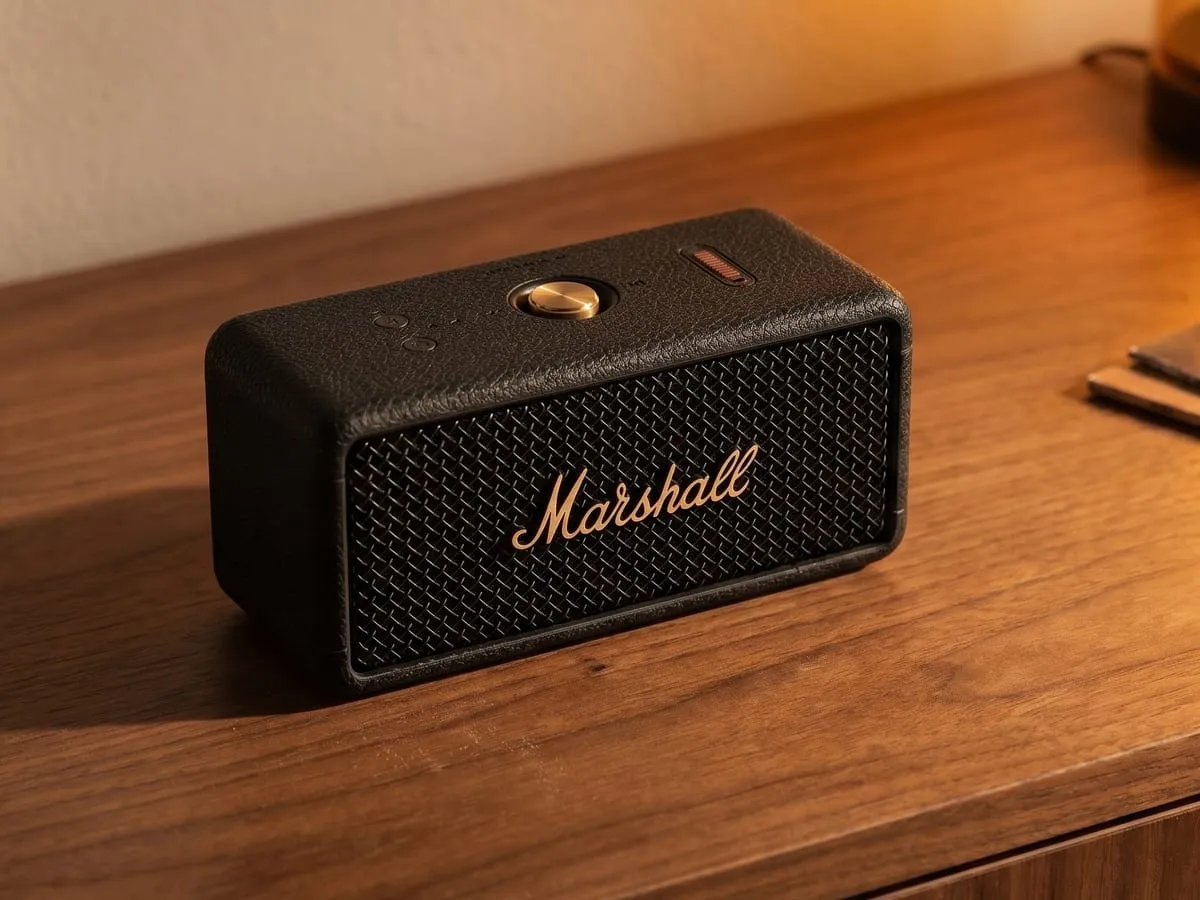
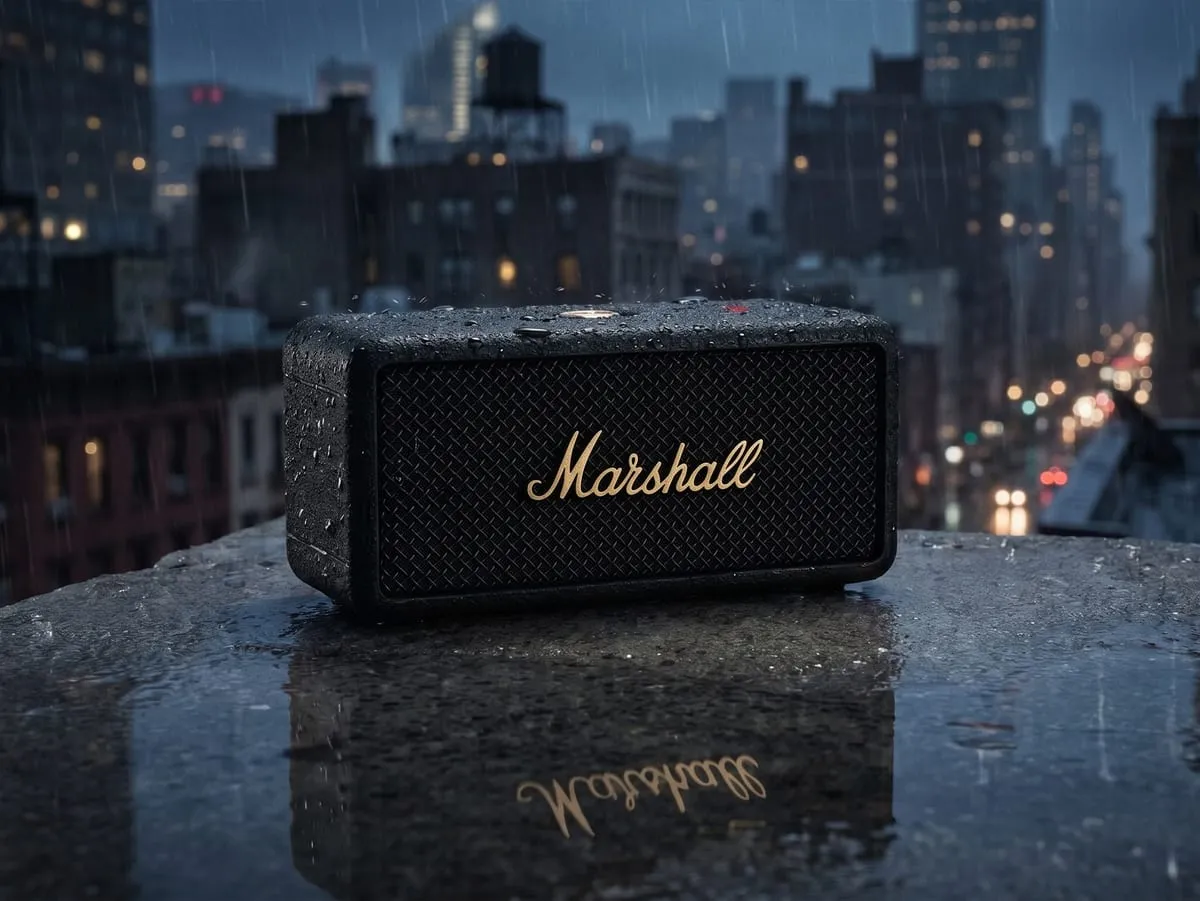
The first thing buyers mention is the design. The Black + Brass colorway carries the Marshall amplifier visual language directly: textured matte grille on the front, the brass-finished control knob on top, the script logo plate, the leather-look strap loop. Tom’s Guide framed it as “tasty-looking,” and the Amazon set echoes the read. People describe taking it out of the box and immediately reaching for a guitar case to set it on top of, because the proportions and the finish make it look like a miniature amp.
The second thing is the weight. Buyers put it directly: it’s a very aesthetic piece that weighs a bit for its size, but the sound quality is good. The Emberton III is denser than most portables in this footprint, which buyers initially read as a negative until they hear the speaker and clock the build quality. It feels like a Marshall product, not a plastic gift-box gadget.
The third thing is pairing. Bluetooth 5.1, one-tap from a phone, holds the connection. No app required to make sound; the optional Marshall Bluetooth app adds EQ and firmware updates but isn’t a gate to basic use.
Use #1: Indoor — The Living Room and Kitchen Lane
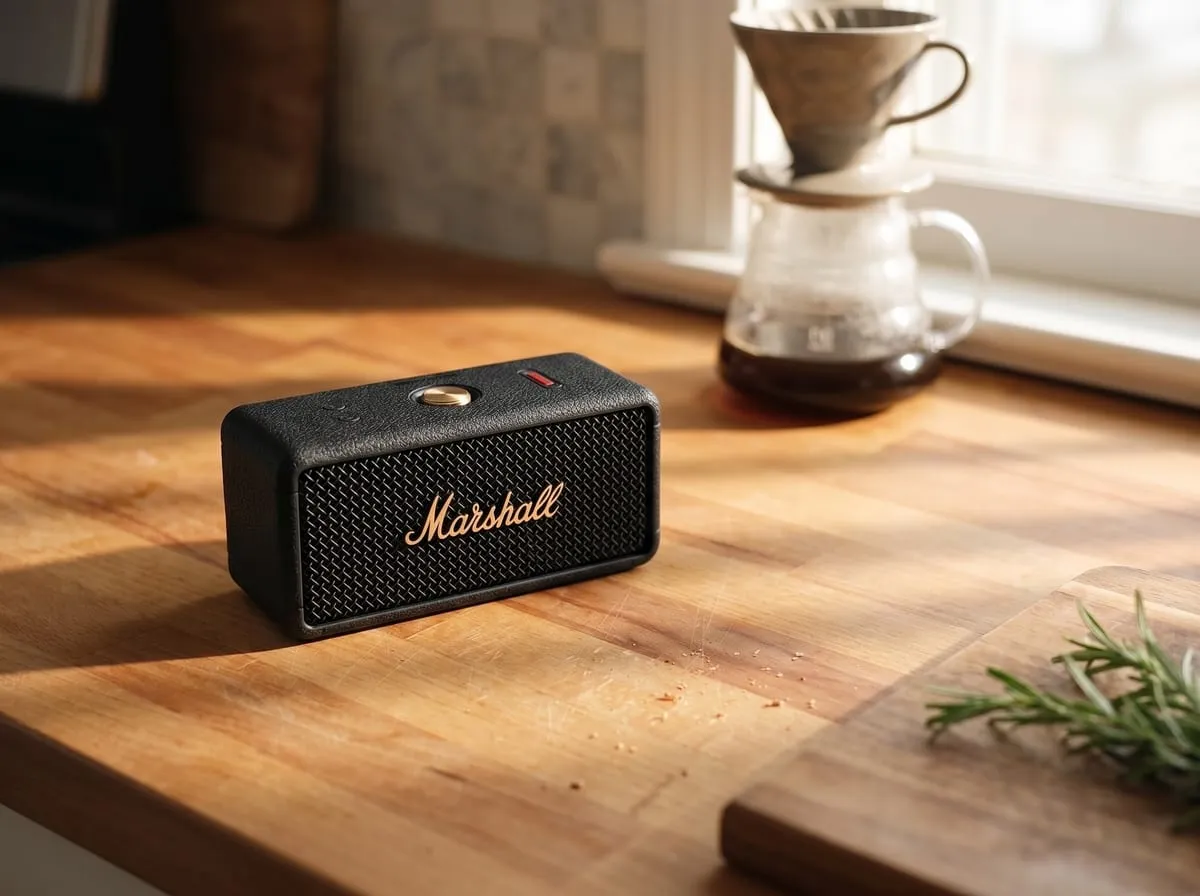
The use case the brand emphasizes least is the one most reviewers describe first: this is the indoor speaker that travels.
Buyers who own a stack of portables put the indoor volume math directly: this one outclasses the rest on sound quality (especially bass), volume — it punches hard for its size — and battery life.
Others put the room-filling spec in real terms: the bass is good without overpowering the mids and highs, and it’s plenty loud — in an open-plan kitchen/dining/living area, played loud, it’s enough to drown out conversation.
True Stereophonic 360 is Marshall’s term for the multi-directional driver layout. In practice, it means the sound radiates outward in a wider field than a single front-firing driver would produce. For a kitchen counter or a coffee table where listeners aren’t all on the same axis, this matters more than the spec sheet makes it sound. A 360-radiating compact speaker fills a room more evenly than a front-firing one at the same wattage.
Two important caveats the editorial reviewers all flag and the Amazon set quietly echoes: push past about 80% volume in a large open room and the highs start to get harsh. TechRadar wrote it directly: “Impressively loud for its size and sounds great at lower volumes, but like almost all speakers this small it gets harsh when you crank it up.” That’s universal small-speaker physics, not a Marshall defect, but the editorial consensus is unanimous so it’s worth knowing going in. For ambient indoor music at conversational-or-louder volume, the Emberton III is well above category average. For a house party with the volume pinned, it’s the wrong category of speaker.
Use #2: Outdoor — IP67 and the 32-Hour Battery
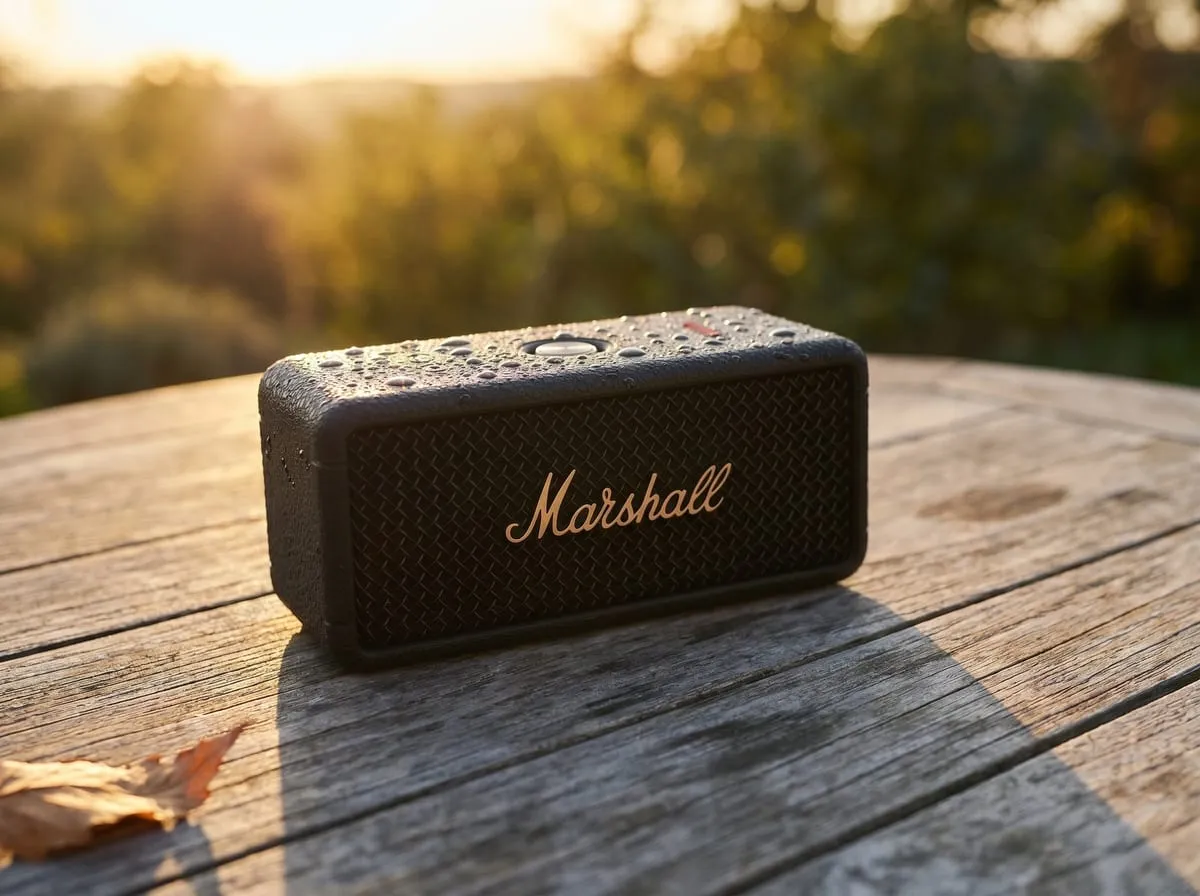
This is where the Emberton III separates itself from the Emberton II that came before it. The Mark III carries an IP67 rating: full dust ingress protection and full submersion in fresh water up to one meter for 30 minutes. The previous generation was IPX7-rated, which covered water but not dust. For real outdoor use, the dust rating matters more than the dB chart suggests. Sand, dirt, pollen, the airborne grit that settles into seams over a weekend at a beach or a campsite: IP67 shrugs it off.
Pair that with the battery spec and the outdoor case writes itself. The Emberton III is rated at 32+ hours of playback on a single charge at moderate volume. Real-world testing across the review set lands close: weekend trips, multi-day campsites, an entire workday on a patio without recharging. Buyers who owned the previous model frame the upgrade story plainly: a very nice little speaker, far better than the Emberton II.
The upgrade math is significant enough that buyers who owned the previous generation specifically call out the difference. IP67 (versus IPX7) plus the longer battery plus the redesigned driver layout: the III isn’t a cosmetic refresh, it’s a genuine generational improvement.
A bonus the brand doesn’t market hard: the built-in microphone. The Emberton II didn’t have one. The III does, and it works for hands-free calls when the speaker is sitting on a picnic table or a kitchen counter. Some buyers name it as the deciding feature — drawn in by the mini-amp look, they ordered the Emberton III specifically for the built-in microphone and the stereophonic sound.
Use #3: Travel — Bag, Carry-On, Day-Trip
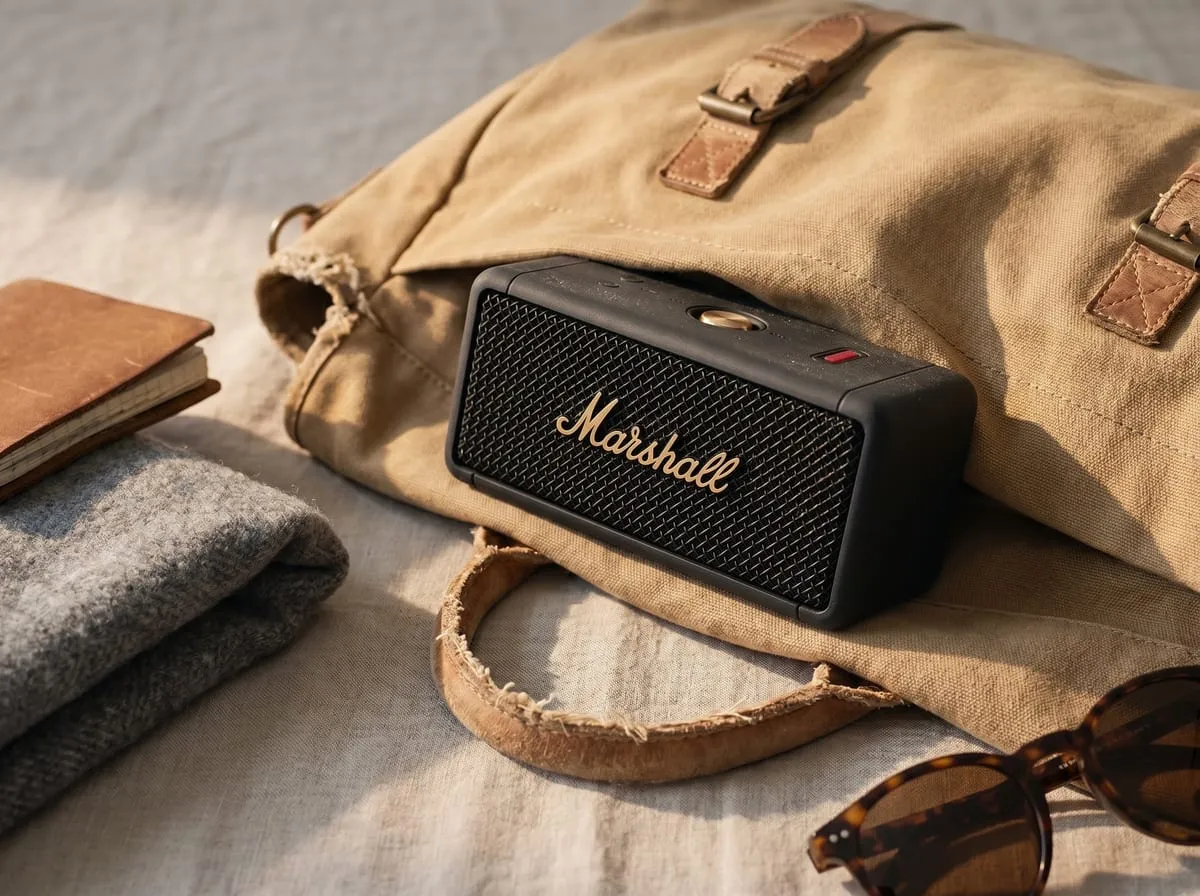
The travel case is the smaller scenario in the reviews, but the people who buy it for this report consistent positives.
The form factor is in the sweet spot for a carry-on side pocket: roughly the footprint of a paperback novel, denser than it looks but still under a pound and a half. The leather-look strap loop on the side is real and load-bearing — clip it to a backpack daisy chain, a duffel handle, or a wrist for the walk from car to chair. The IP67 rating means it survives the airport-to-poolside transition without a dry-bag.
Bluetooth 5.1 holds the connection at ~30 feet for normal use; outdoor distances of 50+ feet work in low-interference environments but obstacle-walled environments shorten the range. The 32+ hour battery is the travel-relevant spec: a multi-day trip without bringing the charging cable is the actual reality for most owners.
One Marshall-specific feature worth mentioning: the optional Marshall Bluetooth app lets two Emberton III units pair in stereo for left/right channel separation. Two units at $170 each is a $340 commitment, which puts it in serious-audiophile-portable territory, but for buyers who already have one Emberton III the second-unit upgrade unlocks a genuine stereo image that a single 360-radiating cube can’t produce.
Head-to-Head: vs. JBL Charge 5 and Bose SoundLink Flex
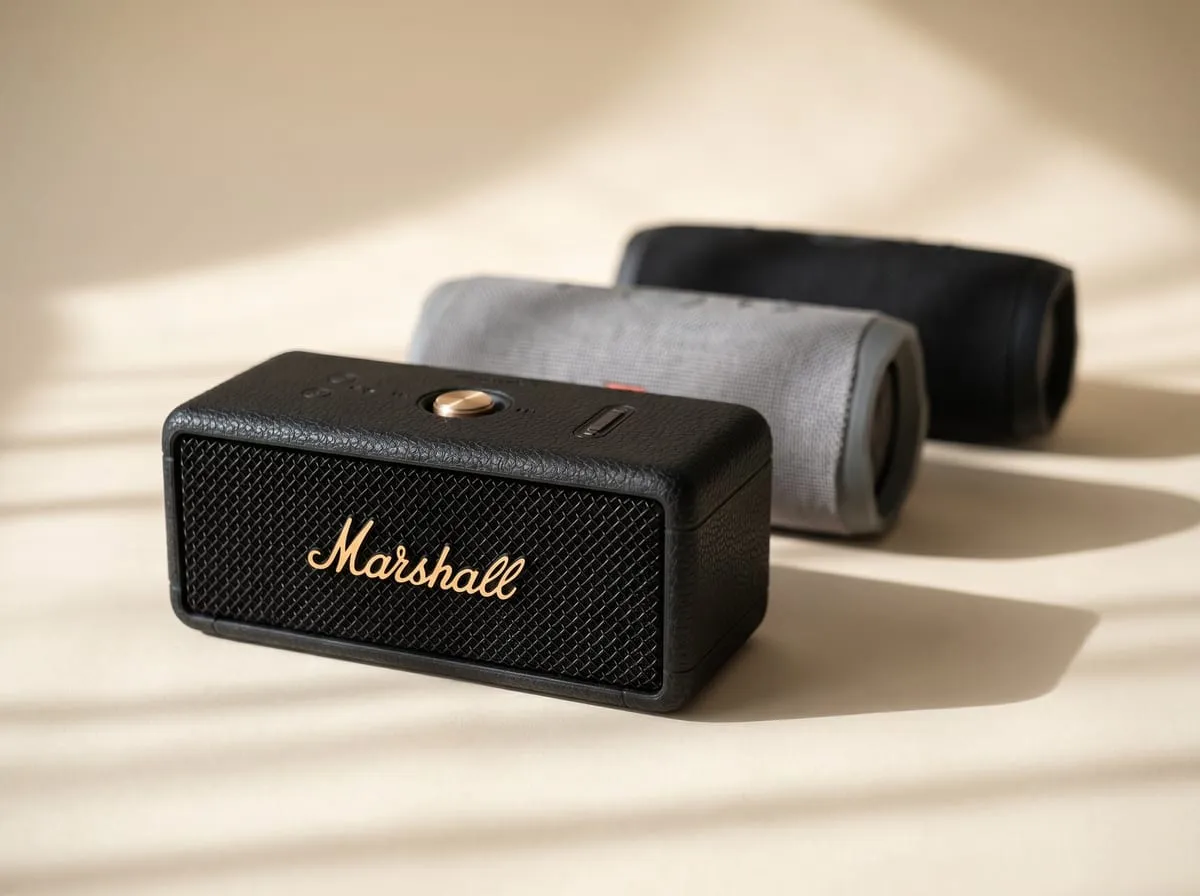
The fair comparison is to the JBL Charge 5 ($180) and the Bose SoundLink Flex ($150) — the two mid-tier portables that share the price bracket and the IP67 rating. The Amazon set has direct cross-brand comparisons from buyers who owned both:
Buyers frame the JBL comparison from direct experience: the Emberton III outclasses it on sound quality, volume, and battery life. The 32-hour Emberton III battery substantially outlasts the Charge 5 (rated 20 hours, real-world closer to 15 at moderate volume). The bass is the closer call — the Charge 5 has a dedicated passive radiator that produces deeper low-end at low-to-mid volumes; the Emberton III has more even tonal balance across the frequency range but doesn’t extend as deep into sub-bass.
For the Bose comparison, the categorical difference is design language. The SoundLink Flex is engineered, minimal, and Bose-clean. The Emberton III is styled, deliberate, and Marshall-loud (visually, not acoustically). Both sound good for their size; the Bose is a touch more neutral, the Marshall a touch more colored toward the warm-mid range that flatters guitar and vocal music. Editorial coverage at Louder Sound landed on “one of Marshall’s best Bluetooth speakers — long battery life and impressive sound for its size,” which is roughly the consensus position.
The pricing math: at ~$170, the Emberton III is $10-20 below the Charge 5 and $20 above the SoundLink Flex. For buyers who’d choose between these three on specs alone, the call is close. For buyers who’d choose between these three on visual presence and brand affinity, the Marshall is the only one of the three that looks like furniture rather than a gadget.
For buyers shopping a tier below this — the $25-30 IP-rated outdoor-cube category — the CHIFENCHY Portable Bluetooth Speaker review and the EBODA Bluetooth Shower Speaker review cover the two best budget alternatives. Different category of product (smaller drivers, LED-ringed, IPX5 / IP67 for the EBODA), but the right peer comparison if the Marshall premium isn’t the right spend.
Features Breakdown
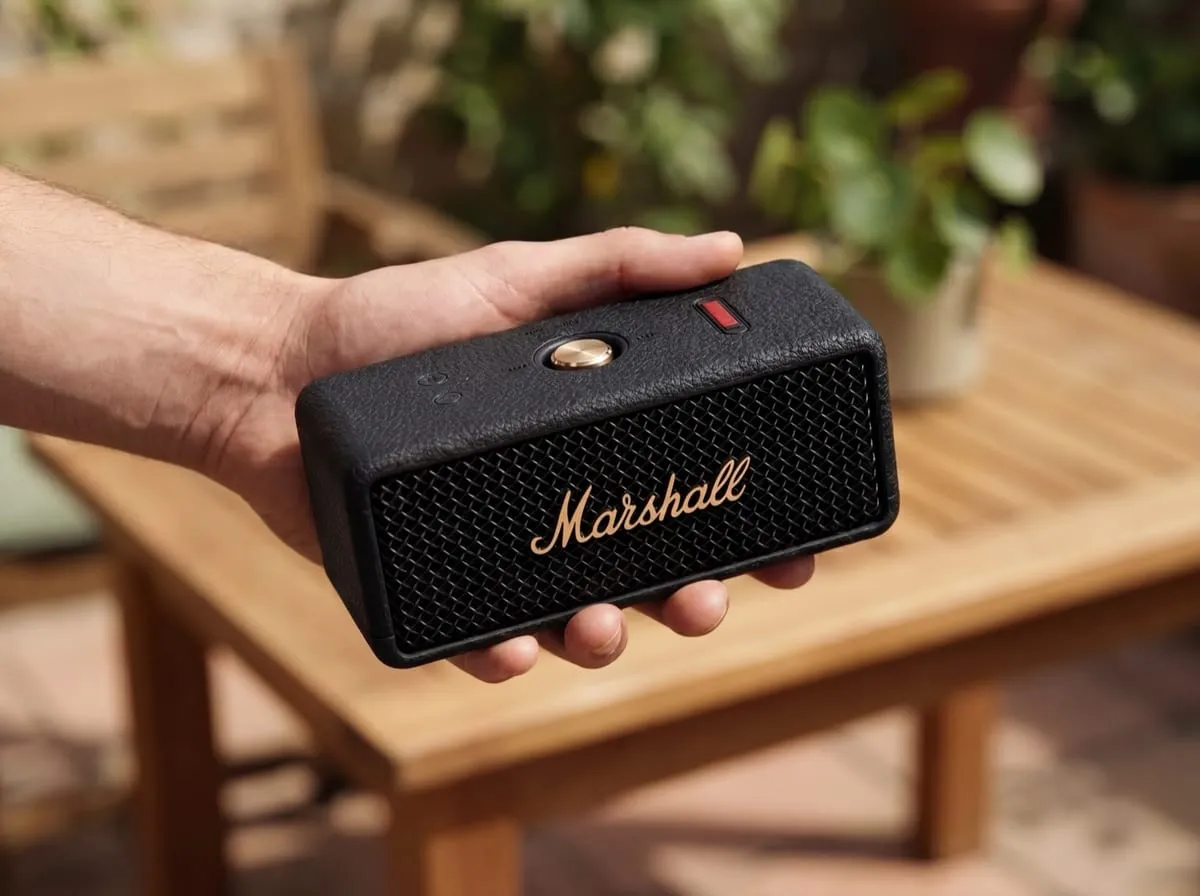
The hero specs, examined honestly:
- IP67 dust + water rating — Full dust protection plus submersion in fresh water up to one meter for 30 minutes. The dust half is the real upgrade over the previous-gen IPX7 rating. Beach, campsite, dusty patio: shrugs them off.
- 32+ hour battery — Rated for over 32 hours of playback at moderate volume. Substantially longer than the JBL Charge 5 (20 hours rated) and the Bose SoundLink Flex (12 hours rated) at the same form factor.
- True Stereophonic 360 sound — Marshall’s term for the multi-directional driver layout. Wider radiation pattern than a single front-firing driver, which fills a room more evenly when listeners aren’t on the same axis.
- Built-in microphone — New for the III generation. Hands-free calls work when the speaker sits on a counter or a table.
- Bluetooth 5.1 — Reliable phone pairing, ~30 ft normal use range, fast reconnect on power-on.
- Marshall Bluetooth app (optional) — EQ adjustment, firmware updates, two-unit stereo pairing for left/right separation. Not required for basic use.
- Black + Brass design — Script logo, brass-finished control knob, textured grille. Looks like a miniature Marshall stack.
Notable absences:
- No companion floating accessory (the speaker is dense and sinks; the IP67 rating means it survives a drop in water, but it doesn’t float on its own).
- No AUX 3.5mm input (Bluetooth or app-only).
- No microSD card slot.
- No party-pairing with non-Marshall speakers (TWS-style multi-brand chains aren’t supported).
Is It Worth $170?
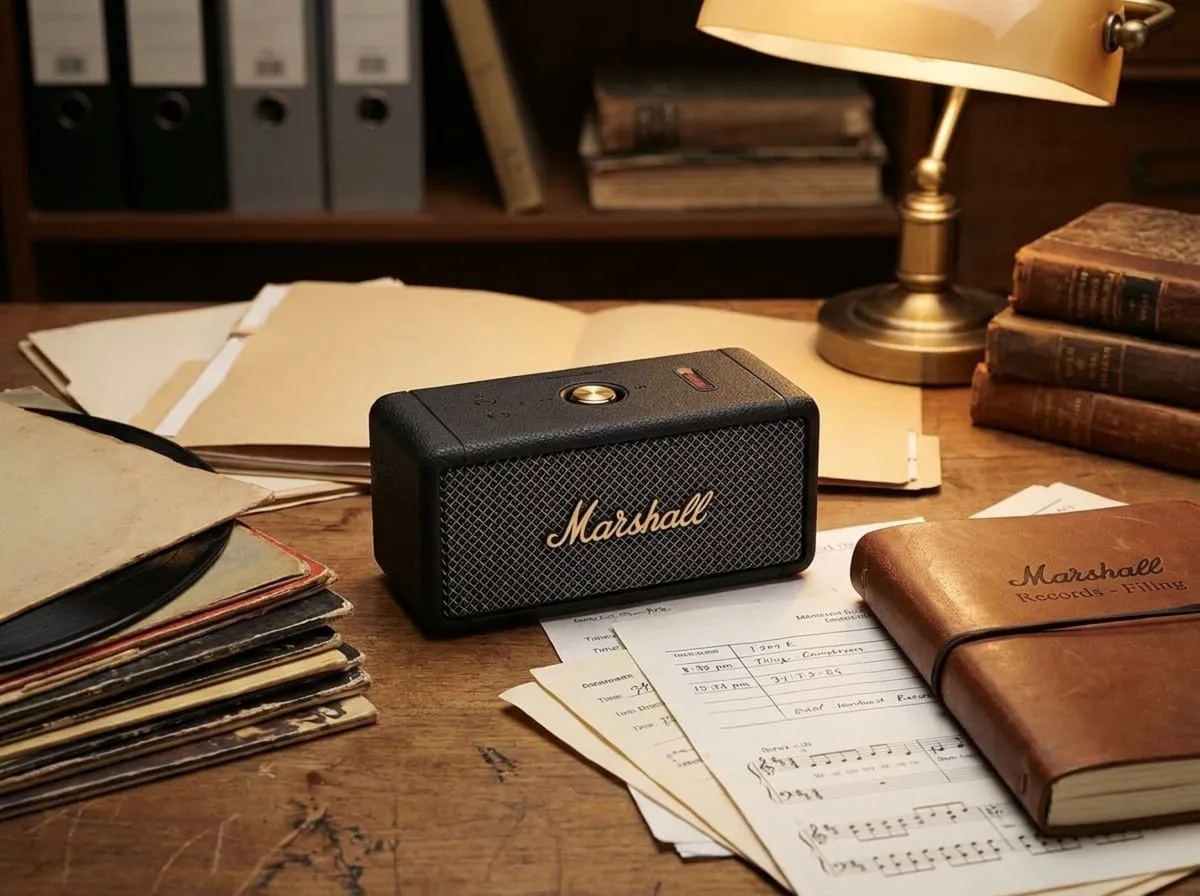
The short answer the review set supports: yes, if you’d specifically pay for the Marshall design language and the 32-hour battery. If those two are negotiable, the $90-130 mid-tier alternatives close most of the gap.
The competitive math at ~$170:
- A JBL Charge 5 (~$180) covers IP67 and good outdoor sound but at 20-hour battery and a more utilitarian look.
- A Bose SoundLink Flex (~$150) covers IP67 and clean Bose tuning at 12-hour battery, minimal design language.
- A Sonos Roam 2 (~$180) covers IP67, multi-room Sonos integration, and tighter tuning, at ~10-hour battery and a much less visually distinct design.
- The Marshall Emberton III covers IP67, 32+ hour battery, True Stereophonic 360, built-in mic, and the Marshall design language for ~$170.
What you pay the premium for: battery (substantially longer than every direct competitor), design (the only one that looks like an heirloom object rather than a gadget), and brand legacy. What you don’t get over the Charge 5: noticeably deeper sub-bass at low volumes (Charge 5 has the passive radiator advantage there).
For the buyer who’d already pause in front of the Marshall section at Best Buy, the III is the right one to take home. For the buyer who’d choose on raw audio spec alone, the Charge 5 is the harder call to argue against.
How we scored the Marshall Emberton III — 4.6 / 5
My rating isn’t an average of anyone’s stars — it’s an editor’s read across the things that actually decide whether a portable Bluetooth speaker earns its spot — weighed from the feature set, the published specs, the build, and the themes that recur across owner feedback. Here’s how the Marshall Emberton III landed:
| What we weighed | Call | Why |
|---|---|---|
| Core sound | Strong | True Stereophonic 360 fills a room evenly at moderate volume and flatters guitar and vocal music, though it turns harsh pushed past about 80% in a large open room. |
| Durability | Excellent | IP67 adds full dust protection on top of one-meter submersion, a real generational gain over the previous IPX7 rating for beach, campsite, and dusty-patio use. |
| Battery | Excellent | Rated over 32 hours at moderate volume, substantially longer than the JBL Charge 5 and Bose SoundLink Flex at the same form factor. |
| Features & connectivity | Good | Bluetooth 5.1, a new built-in mic for hands-free calls, and optional app EQ plus two-unit stereo pairing, but no AUX, no microSD, and no multi-brand TWS chaining. |
| Value | Good | At about $170 the design, battery, and brand legacy justify the premium, but the $90 to $130 mid-tier closes most of the spec gap for buyers who don’t want the Marshall look. |
Why 4.6 and not a perfect 5: the highs get harsh past roughly 80% volume in a large room, it doesn’t extend as deep into sub-bass as a passive-radiator rival like the Charge 5, and the premium price is hard to argue on raw spec alone.
This is my own editorial rating — not an average of Amazon’s stars. How I rate →
The Verdict
After working through the editorial coverage at TechRadar, Tom’s Guide, and Louder Sound (all converging on “loud, beautiful, harsh at top volume”), the over a thousand verified Amazon buyers, the cross-brand head-to-head reviews where Emberton III owners describe out-volume-ing the JBL Charge 5 in their own kitchens, and the Mark II-to-Mark III upgrade story (IP67 over IPX7, 32 hours over 30, redesigned driver layout, added mic), here’s the read: the Marshall Emberton III is one of the few mid-tier portables where the brand identity isn’t a tax on the spec sheet. The 32+ hour battery is genuinely best-in-class. The IP67 rating outpaces the previous generation in a way that matters outdoors. The design language is the reason the speaker keeps getting bought as a gift for guitarists and music people who’d never pick up a JBL.
What it isn’t: a bass cannon, a party-volume speaker for an open backyard, or a price-led value pick versus the $90-130 mid-tier. The Marshall premium is real, and you should pay it deliberately.
Buy it if you:
- Want a portable speaker that looks like a piece of furniture, not a piece of tech
- Need 32+ hours of battery for multi-day outdoor or travel use
- Listen at moderate-to-medium volume (where the Emberton III sounds its best)
- Are upgrading from the Emberton II and want the IP67 + mic + driver upgrade
- Buy gifts for musicians, music journalists, vinyl people, or anyone who’d notice the brand
Skip it if you:
- Need a party-volume bass cannon (different category)
- Care most about per-dollar audio spec value (JBL Charge 5 or the $90 mid-tier are sharper)
- Want full Sonos multi-room integration (Sonos Roam 2 instead)
- Need an AUX or microSD input (this is Bluetooth-or-app only)
- Want a floating speaker (Emberton III sinks; the strap is your safeguard)
FAQ
Q: How does the Marshall Emberton III compare to the Emberton II? The III is a real generational upgrade, not a cosmetic refresh. IP67 over IPX7 (full dust protection added), longer battery (32+ hours over 30), a built-in microphone the II didn’t have, and a redesigned driver layout for the Stereophonic 360 spec. Direct buyers who owned both call the III noticeably better.
Q: Is the Marshall Emberton III actually waterproof? Yes, IP67-rated. Full submersion in fresh water up to one meter for 30 minutes, plus full dust protection. It doesn’t float — the strap loop is the practical safeguard for poolside or kayak use. Rinse with fresh water after ocean exposure (saltwater corrodes electronics over time, and IP67 doesn’t cover saltwater specifically).
Q: How long does the battery actually last? Rated at 32+ hours at moderate volume. Real-world testing across the Amazon set lands close at moderate listening levels; at full volume, expect closer to 15-18 hours (this is true of every Bluetooth speaker — manufacturer ratings assume moderate volume). USB-C charging.
Q: Can you pair two Marshall Emberton III speakers in stereo? Yes, through the optional Marshall Bluetooth app. Two units paired play as a left/right stereo pair, which produces a genuine stereo image a single 360-radiating cube can’t. The combined ~$340 outlay puts it in serious-portable-audio territory.
Q: Is the sound quality worth the $170 price? For the use cases the reviews describe (indoor moderate-volume listening, outdoor backgrounds, travel) and for buyers who value the Marshall design language: yes. For buyers comparing pure audio spec per dollar: the JBL Charge 5 (~$180) closes the gap on sub-bass; the $90-130 mid-tier closes most of the gap on neutral listening.
Q: Where can I buy the Marshall Emberton III? Available on Amazon here. Typically faster delivery and easier return than third-party listings.
Join the Nova’s Picks community 🔍
Get new honest reviews, roundups & finds first — and ask me what to buy before you do.
Join the free Facebook group →