Published
- 13 min read
Wondercide Flea, Tick & Mosquito Spray Review: Plant-Based, Top-Rated

Curated by Nova · FetchWorthy
⭐ My editorial rating: 4.2 / 5 — how I rate →
Safety note: With cats, patch-test a small area first and apply lightly — essential oils and feline sensitivity warrant extra caution. Always follow the product label directions. This article reports manufacturer specifications and reviewer patterns; it is not veterinary advice. Talk to your vet before starting any pest treatment on a pet with a health condition.
Heads-up: This is an editorial review compiled from tens of thousands of verified Amazon reviews, manufacturer specifications, and published feature claims (plant-based essential-oil formula, kill-on-contact mechanism, dual pet-and-home use). The rating above is my own editorial rating, not an average of Amazon’s stars. It contains Amazon affiliate links — if you buy through them I earn a small commission at no extra cost to you. The picks are based on what the data says, not on sponsorship; no brand paid for or pre-approved this post. I do not test products personally. With pest products in particular: I report what the maker claims and what reviewers consistently say — I make no medical or efficacy guarantees, and your vet is the final word for your animal.
The Pests Come Back In — With the Pets
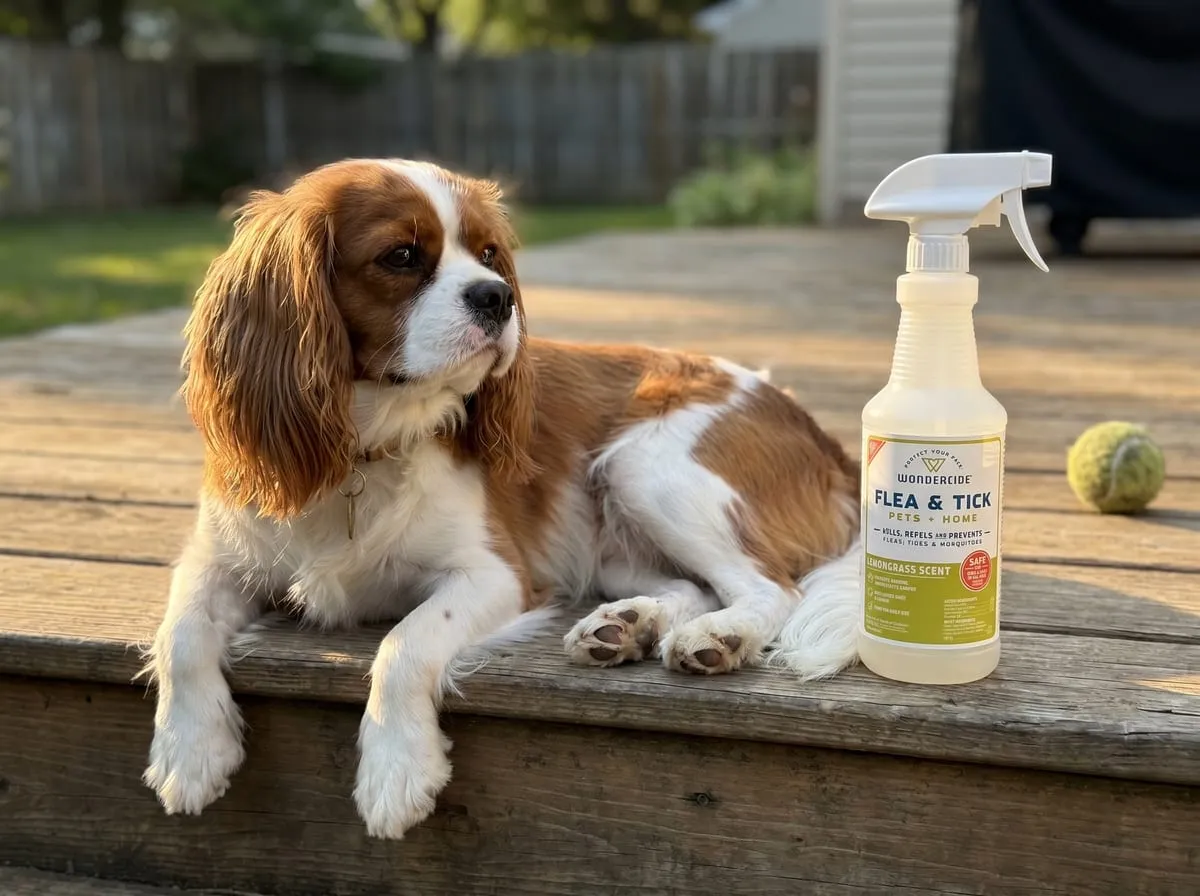
Most flea and tick advice treats the problem as something that happens outside. It isn’t. A good flea and tick spray for pets has to work where the pests actually end up: indoors. Fleas and ticks hitch a ride back inside on the dog after a walk through tall grass. Mosquitos drift in through the screen door at dusk. By the time you spot one on the carpet, the population is already living in your house, in the pet’s bedding, in the sofa seams, along the baseboards.
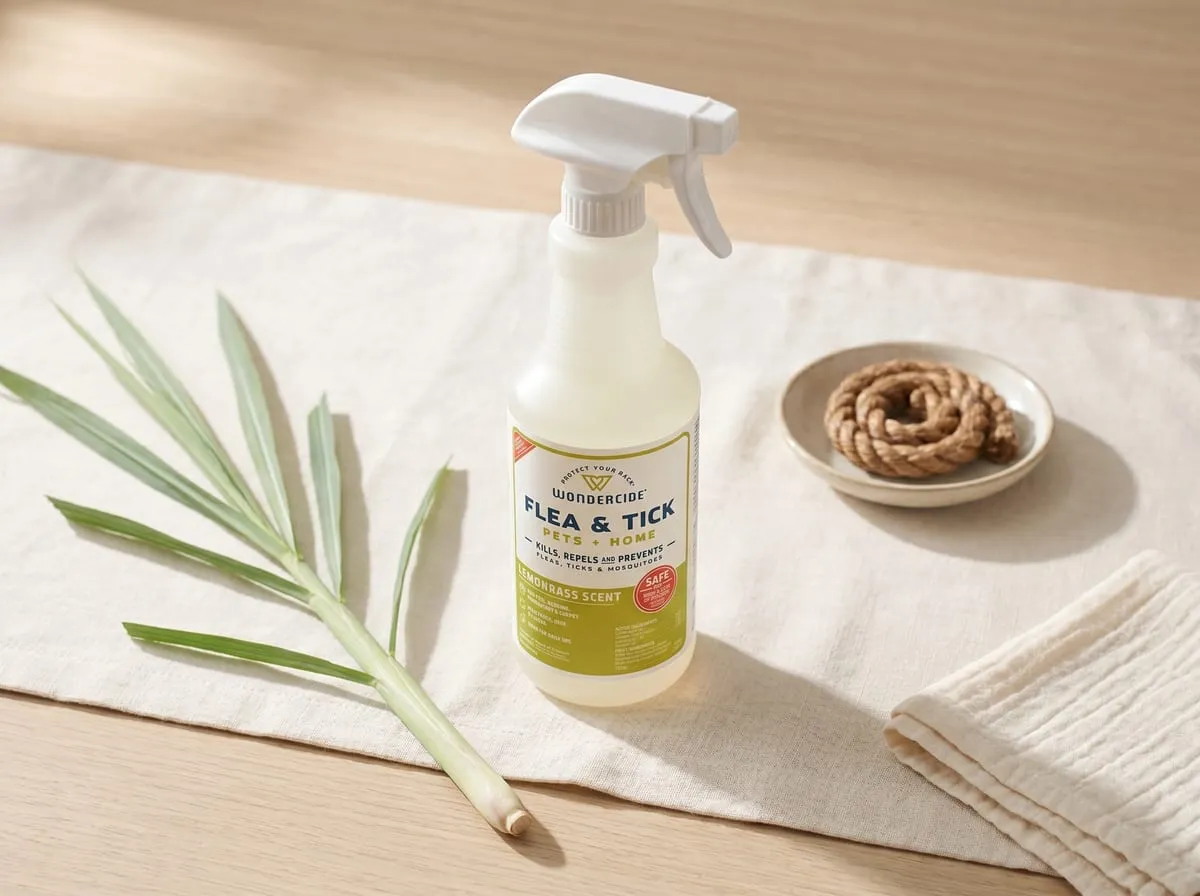
That’s the problem the Wondercide Flea, Tick & Mosquito Spray for Pets + Home is built around. It’s a plant-based spray you can use in two places at once: directly on the pet and on the surfaces around your home where pests gather. The active ingredients are natural essential oils (the version reviewers gravitate to is the lemongrass scent), and per the manufacturer it’s formulated to kill fleas, ticks, and mosquitos on contact, not merely repel them. The 16-oz trigger bottle is the everyday SKU: there’s no hose and no mixing, the dilution math disappears, and pets can be back in the room with no waiting period.
With tens of thousands of verified ratings, it’s one of the most-reviewed pet pest products on Amazon. That volume is the whole reason an editorial read is worth doing. A handful of reviews can be cherry-picked; tens of thousands form patterns. Below is what those patterns actually say, and why I land at 4.2 out of 5.
What Tens of Thousands of Reviews Actually Tell You
My 4.2 reflects an honest split in the feedback, and the spread is informative. The most positive reviews cluster around two things: the lemongrass scent, and the fact that it can go directly on the animal without the dread that comes with harsh chemical treatments. The critical reviews cluster around one expectation mismatch: buyers who wanted a single spray to end an infestation overnight, then were frustrated when fleas reappeared a week later.
That gap isn’t a product failure. It’s a misunderstanding of how flea control works, and it’s the single most important thing to understand before you buy. Buyers who used it correctly describe the timeline plainly: it takes several weeks, because eggs keep hatching and a new batch of fleas emerges before the cycle is exhausted, and they tend to mention loving the smell in the same breath.
That account is the product in one sentence. It kills what it contacts. It does not pre-emptively sterilize an environment that already has eggs in it. Set that expectation and the score reads very differently. The people who treated it as a multi-week routine are overwhelmingly the people leaving the best reviews.
What’s in the Bottle: Plant-Based, Essential-Oil Active
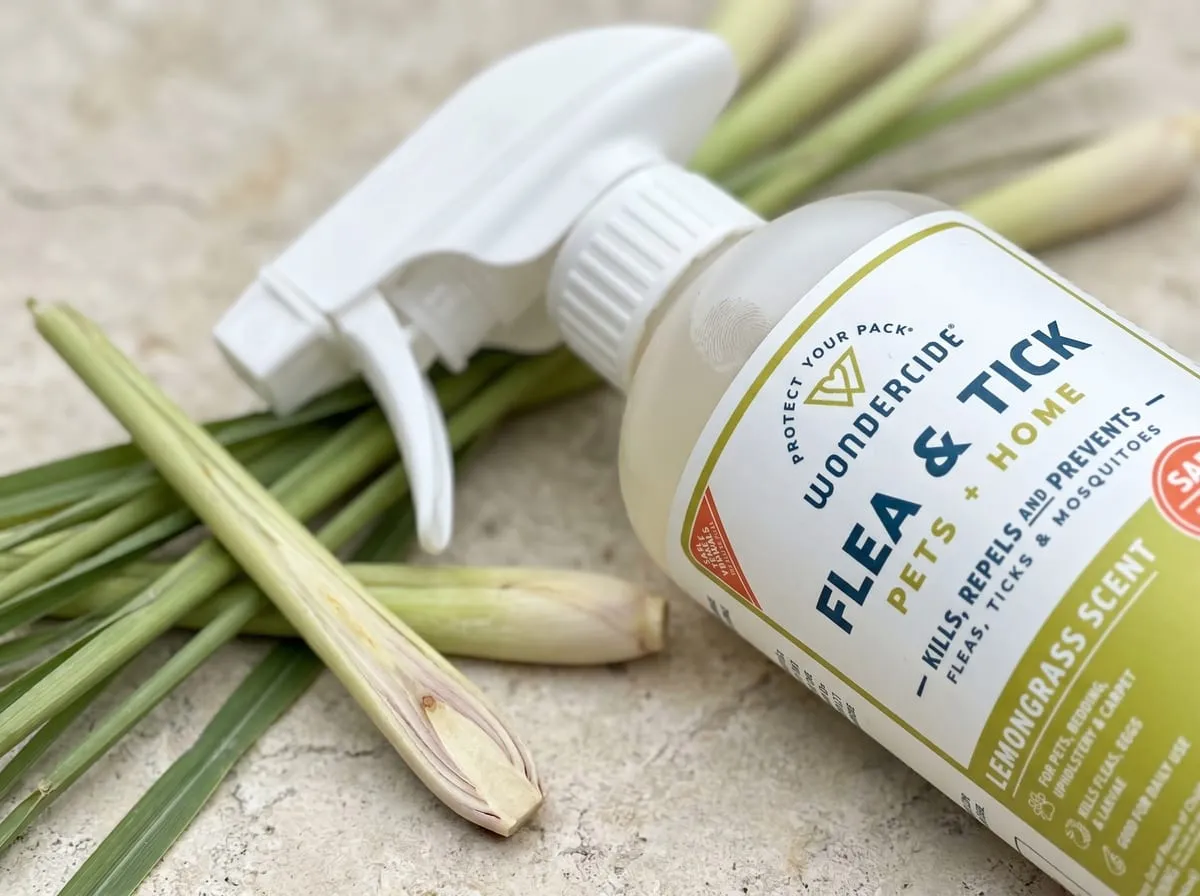
The thing that draws people to Wondercide over a conventional spot-on or chemical spray is the ingredient list. The active ingredients are natural essential oils (lemongrass in the variant reviewers most often recommend) rather than synthetic pesticides. The manufacturer describes it as 100% plant-based and rated safe to apply directly to pets and to use in living spaces.
For a lot of owners, that’s the entire purchase decision. Buyers with sensitive animals say so directly. They describe it as non-toxic, used around the house and lightly on cats, working safely when the directions are followed even if it’s not a one-and-done fix, and they appreciate that it’s safe for their cats and smells pleasant.
And the scent, which on most pest products is a thing you tolerate, is here a genuine selling point. It’s the strongest single signal in the whole review set. Buyers volunteer it unprompted, over and over: they love the lemongrass smell, spray lightly on a small dog and rub it on cats, and note that the furniture smells good afterward.
When a pest spray’s most-mentioned attribute is that the house smells better afterward, that tells you something about how it fits into daily life. People keep it on the counter instead of hiding it under the sink.
How to Use It: On the Pet (Mind the Cat Caveat) and On the Home
The two-surface design is what makes this a single bottle instead of three. Here’s how reviewers actually deploy it.
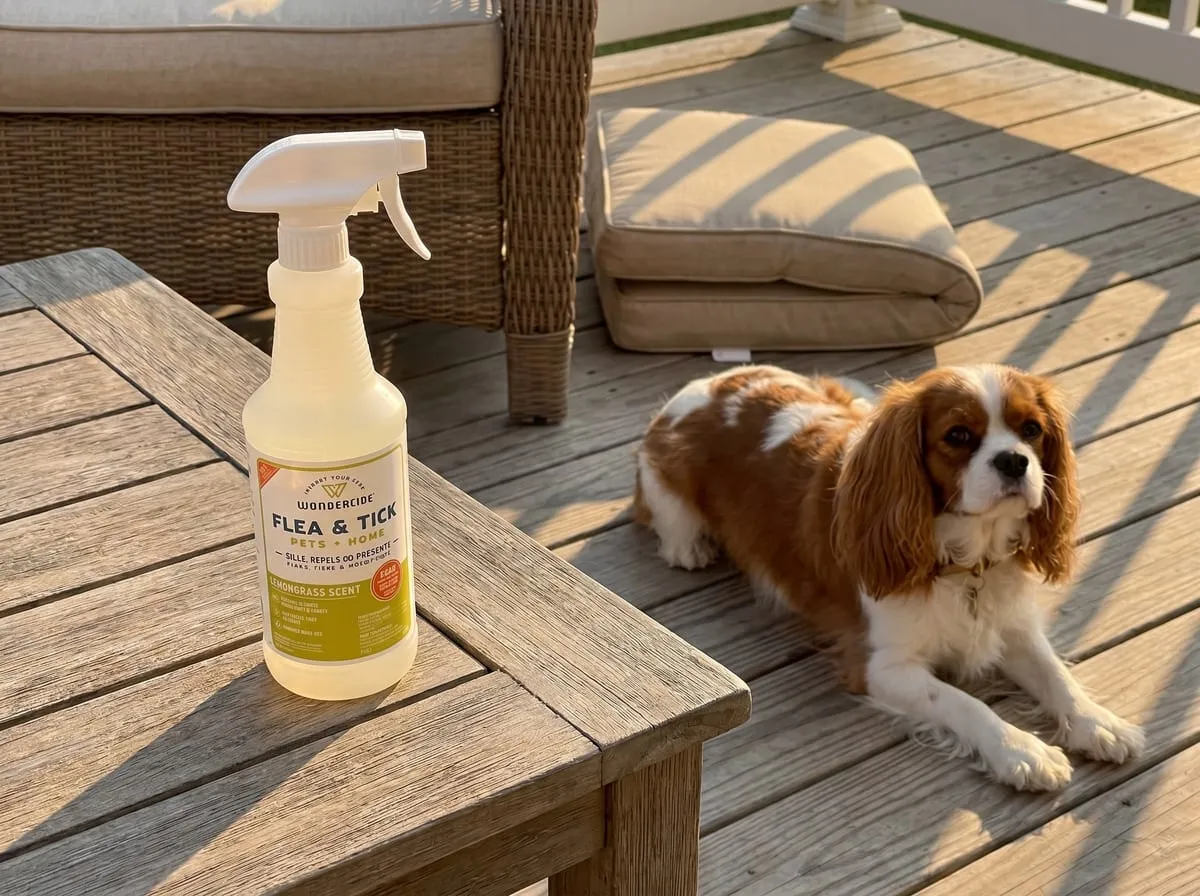
On dogs. The most-repeated technique among buyers with small dogs is not to spray the coat directly. They spritz it into their own hands first, then finger-fluff it through the fur, especially on the feet and belly area. That gives control over coverage (feet and belly being the areas that brush through grass) without overspraying a small animal. For dogs heading into fields or wooded areas, buyers treat it as a pre-walk step, spraying the dog before a walk into fields or woods and giving the bedding and patio furniture a pass too.
Owners in multi-dog households describe the on-contact effect bluntly. Across a couple of German Shepherds and a Yorkie, the fleas reportedly started dying as soon as the spray went on.
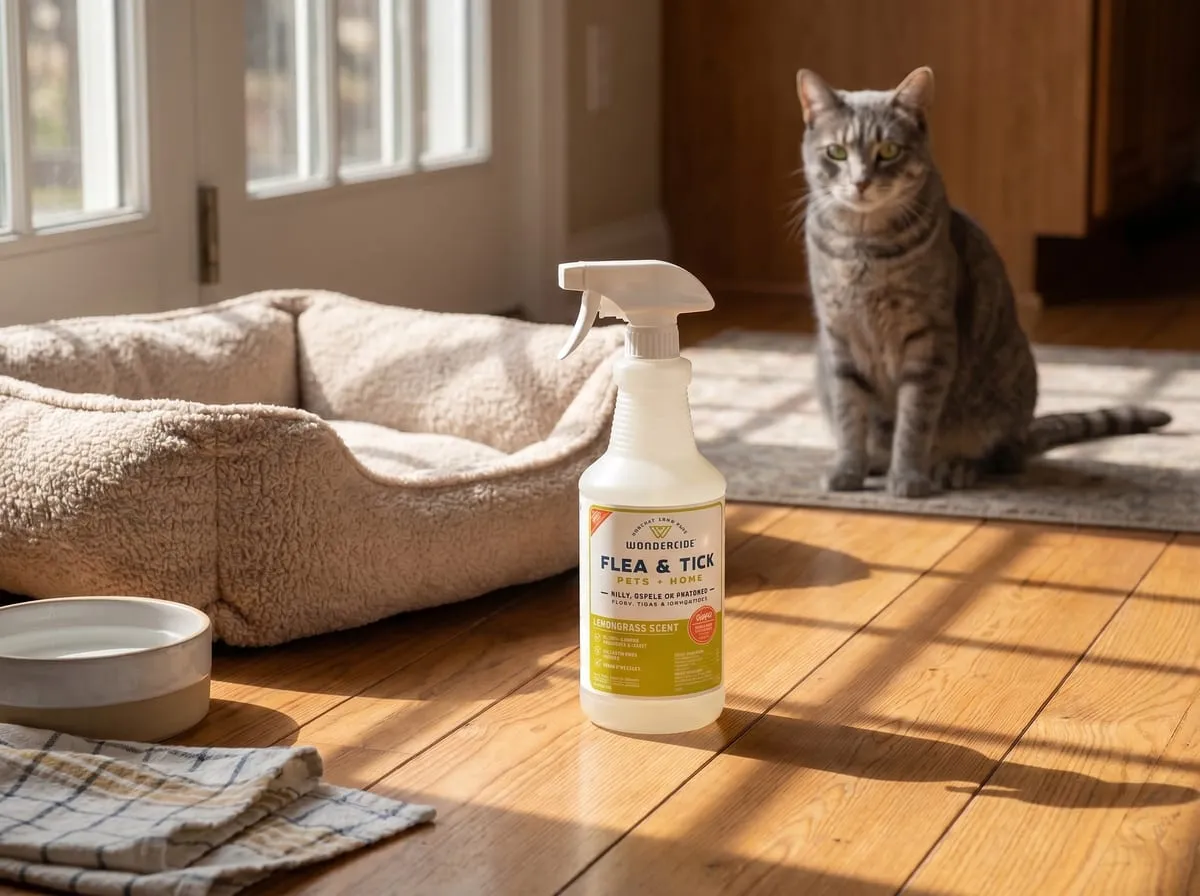
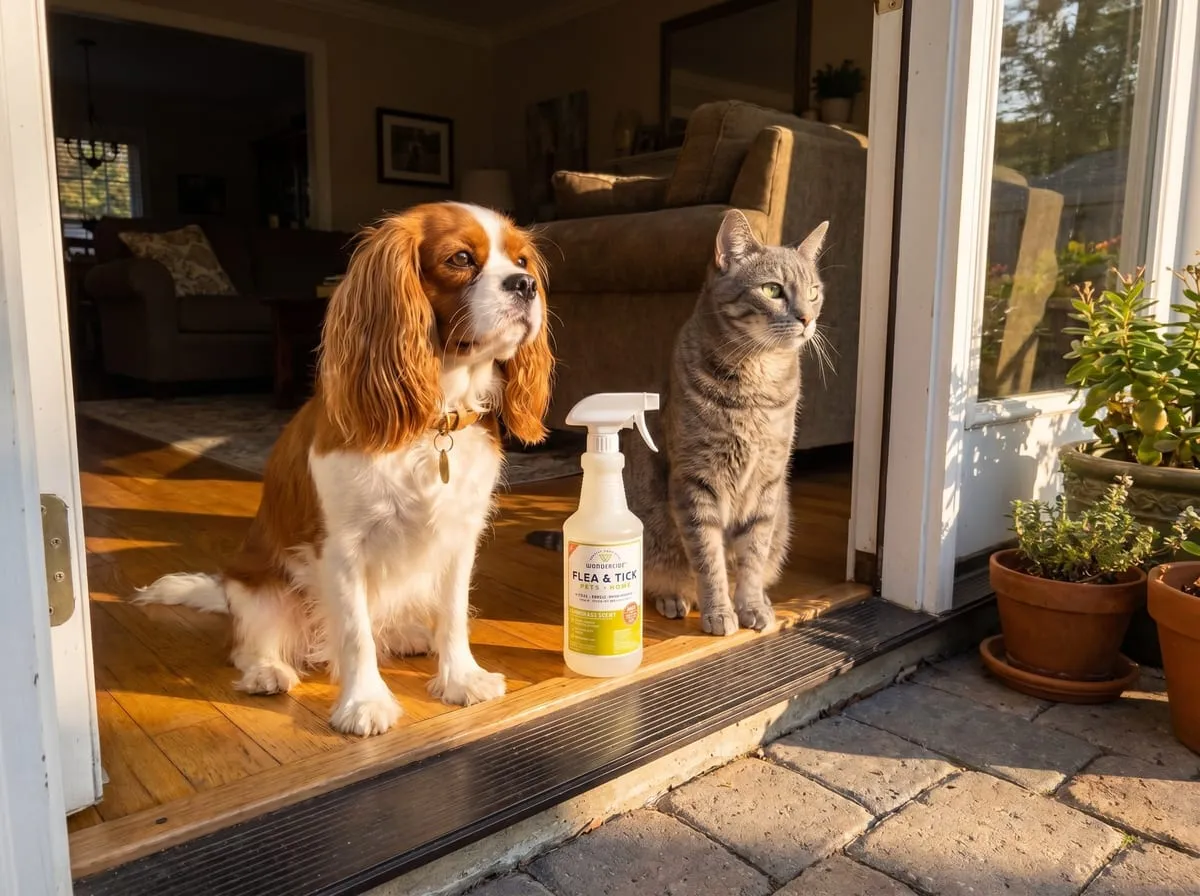
On cats — patch-test first. This is the most important caution in the entire review. Cats metabolize essential oils differently than dogs and are more sensitive to them. The manufacturer recommends a test spray on a small area roughly an hour before full application for cats, and watching for any behavior change afterward; the smaller 4-oz size is suggested for cats because it delivers a finer, more controllable mist. Buyers who use it on cats describe applying it lightly, rubbed on, never a heavy direct spray. Most cats tolerate it fine at proper dilution, but individuals vary, so introduce it cautiously and follow the label. If your cat has a health condition, clear it with your vet first.
On the home. This is where the value compounds. Buyers spray pet bedding, sofas, carpets near the door pets use most, baseboards, patio furniture, and doorframes, anywhere pests enter or settle. One buyer even reported it handling a problem that had nothing to do with pets at all: some small vermin nibbling at their feet under the office chair, dealt with and the room left smelling pretty.
Roaches and small yard vermin come up repeatedly as a bonus. It’s marketed for fleas, ticks, and mosquitos, but the contact-kill mechanism is indiscriminate enough that owners keep finding new uses for the bottle.
Pros
Drawn from the patterns across tens of thousands of verified ratings:
- Lemongrass scent is praised in nearly every positive review — the single strongest signal in the dataset; reviewers volunteer it without being asked, and several describe the house smelling better afterward.
- Plant-based, essential-oil active — owners with chemical-sensitive pets specifically choose this over conventional sprays.
- Genuinely dual-purpose — one bottle covers the animal and the home, replacing separate pet and household products.
- Kills on contact, per the manufacturer — the top reviews describe visible flea death within minutes of direct contact, not just repelling.
- No hose or mixing, and no wait — the 16-oz trigger bottle is ready to use and pets can be near treated surfaces without a long re-entry window.
- Works on more than the label promises — roaches and small indoor vermin show up as a recurring bonus.
Specs at a Glance
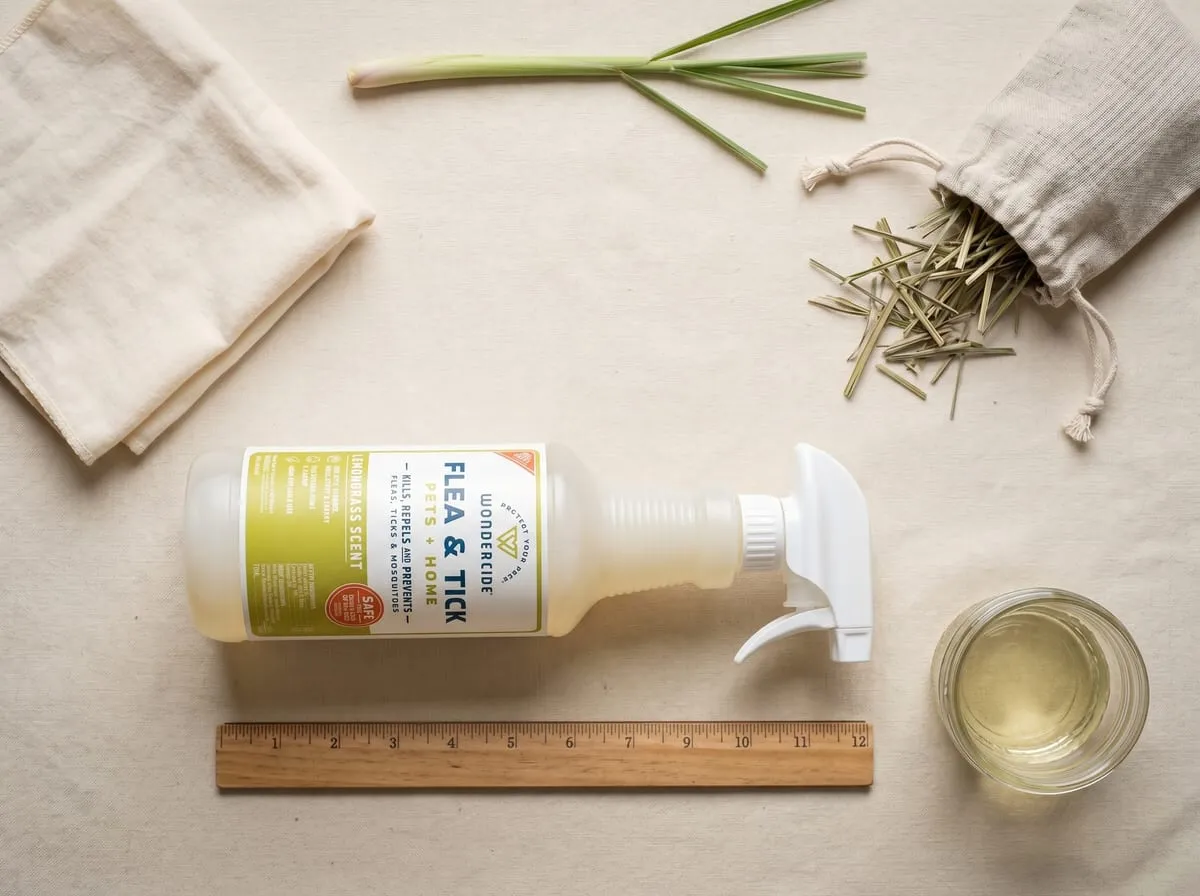
| Volume | 16 fl oz trigger-spray bottle (4 oz size also offered — suggested for cats) |
| Active ingredients | Natural essential oils (lemongrass formulation) |
| Targets | Fleas, ticks, mosquitos — kills on contact, per manufacturer |
| Application | Direct on pets + indoor/outdoor home surfaces |
| Small-dog method | Spray into hand → finger-fluff through coat (feet + belly) |
| Cat method | Patch-test first → apply lightly; 4-oz size suggested |
| Re-treat frequency | As needed during active infestation (every few days) |
| Formulation | 100% plant-based |
| My rating | ⭐ 4.2 / 5 (my editorial score — see the full breakdown below) |
| Price tier | Budget |
Good to Know Before You Buy
A few quick things to use it well — each is easy to plan around.
- Cats are more essential-oil sensitive than dogs. The caveat that matters most: patch-test a small area about an hour before full application, watch for any behavior changes, apply lightly (the 4-oz size gives a finer mist), follow the label, and check with your vet if your cat has any health condition.
- Plan a multi-week cycle, not a single spray. It kills adult fleas on contact, but eggs already in carpet and bedding keep hatching for weeks — so spray pets, bedding, and high-traffic surfaces every few days during an active infestation until the hatch cycle is done. That expectation is the whole difference between the happy reviews and the disappointed ones.
- The scent is strong for the first 15–30 minutes. Most owners count the lemongrass as a plus; it fades quickly. If anyone at home is fragrance-sensitive, apply in a ventilated area.
- It’s a routine, not a fortress. Because it works on contact rather than coating the coat with a long-acting agent, re-treat before high-exposure outings like a hike or a field walk.
The Value Read
On a per-ounce basis this sits firmly in budget territory, and the dual-purpose design is where the math gets favorable: one bottle does the job that a separate pet spray and a separate household spray would otherwise split between them. For owners who object to the cost — and the chemicals — of conventional spot-on treatments, a plant-based bottle that handles the pet and the house is an easy comparison to win. Just budget for going through it faster during an active infestation, since the multi-week cycle means more frequent application than a once-a-month spot-on.
How we scored the Wondercide Spray — 4.2 / 5
My rating isn’t an average of anyone’s stars — it’s an editor’s read across the things that actually decide whether a flea, tick, and mosquito spray earns its spot — weighed from the feature set, the published specs, the plant-based formula and dual pet-and-home design, and the themes that recur across owner feedback. Here’s how the Wondercide Spray landed:
| What we weighed | Call | Why |
|---|---|---|
| Core job (kills pests) | Strong | Owners report visible flea death within minutes of direct contact, and the contact-kill mechanism even handles roaches and small vermin as a bonus. |
| Safety & pet-friendliness | Strong | A 100% plant-based, essential-oil formula rated safe to apply directly on pets is the whole reason chemical-sensitive households reach for it. |
| Ease of use | Good | The 16-oz trigger bottle needs no hose, no mixing, and no re-entry wait, though small-dog and cat application call for a careful hand-and-fluff technique. |
| Value | Strong | A budget per-ounce price plus a genuinely dual-purpose design means one bottle replaces a separate pet spray and a separate household spray. |
| The catch (timeline) | Fair | It kills on contact but doesn’t pre-empt eggs already in the carpet, so it demands a multi-week routine rather than a one-shot cure. |
Why 4.2 and not a perfect 5: it isn’t an overnight fix — eggs keep hatching for weeks, so it only works as a multi-week routine and needs re-application before high-exposure outings; cats also require extra caution (patch-test, light application) because they are more essential-oil sensitive than dogs.
This is my own editorial rating — not an average of Amazon’s stars. How I rate →
The Verdict
Buy it if you want a plant-based, essential-oil spray you can use on both your pet and your home; you have chemical-sensitive animals (introduced carefully, with the cat caveat above); you’re willing to treat flea control as a multi-week routine rather than a one-shot fix; and you’d genuinely prefer a pest product that makes the house smell of lemongrass instead of chemicals.
Skip it if you’re looking for a single-application overnight cure, you want a long-acting once-a-month treatment with zero re-application, or your animal can’t tolerate fragrance at all. For severe or persistent infestations, this works best alongside a vet-directed plan rather than as a sole solution.
For most households fighting seasonal fleas, ticks, and mosquitos — and especially those who don’t want harsh chemicals on the animal or in the living room — the appeal is clear: one budget bottle, two surfaces, a scent people actually like, and a track record across tens of thousands of ratings that holds up once you understand the multi-week timeline.
FAQ
Is Wondercide safe to spray directly on my dog? The manufacturer rates it safe for direct application on dogs, and the plant-based, essential-oil formula is a large part of why owners choose it. The common reviewer technique for small dogs is to spray into your hands and finger-fluff it through the coat — feet and belly especially — for better coverage control. Always follow the label.
Can I use it on cats? Yes, but with more care than dogs. Cats are more sensitive to essential oils, so the manufacturer recommends a small patch-test about an hour before full application, applying lightly, and the smaller 4-oz size for a finer mist. Watch for any behavior change, and check with your vet first if your cat has a health condition. Reviewers who use it on cats apply it lightly, never a heavy direct spray.
How long does it take to get rid of fleas? Plan for a multi-week cycle, not an overnight fix. It kills adult fleas on contact, but eggs already in the environment hatch over the following weeks. Reviewers who treated pets, bedding, and surfaces every few days until the hatch cycle was exhausted had the best results.
Does the lemongrass smell linger? It’s strongest for the first 15–30 minutes, then fades. Most reviewers like it and mention the house smelling fresh afterward; a few find the initial hit sharp, so apply in a ventilated space if anyone is fragrance-sensitive.
What can I spray it on besides the pet? Reviewers use it on pet bedding, sofas, carpets near the door, baseboards, patio furniture, and doorframes. Several also report it handling roaches and small indoor vermin as a bonus beyond fleas, ticks, and mosquitos.
Does it actually kill pests or just repel them? The manufacturer markets it as kill-on-contact, and the reviews describe visible flea death within minutes of direct contact rather than simple repelling. It is not a long-acting barrier, though, so re-application before high-exposure activities is part of using it well.
Part of our 6 Best Summer Cooling & Water Picks for Dogs roundup.
Join the Nova’s Picks community 🔍
Get new honest reviews, roundups & finds first — and ask me what to buy before you do.
Join the free Facebook group →